The Short Answer
Bucharest was called "Little Paris" (Micul Paris) because, between roughly 1860 and 1940, Romanian elites — most of them educated in France — systematically rebuilt their capital in the Parisian image. They hired French architects, laid out wide tree-lined boulevards, and created a cafe culture that rivaled the Left Bank. The result was a city that genuinely looked and felt like a smaller version of Paris.
The nickname was not mere flattery. Foreign travelers and diplomats who visited Bucharest in the early 1900s routinely compared it to Paris. The similarities were deliberate: King Carol I (a Hohenzollern prince who spoke fluent French) and the Romanian political class of that era saw French civilization as the model to follow, and they had the oil wealth to make it happen.
How Bucharest Earned the Nickname
The French Connection (1850s-1900s)
The transformation began after the 1848 revolution, when a generation of Romanian intellectuals returned from studies in Paris with radical ideas about both politics and urban planning. Men like Ion C. Bratianu and C.A. Rosetti had lived on the Seine; they wanted the Dambovita to feel the same way.
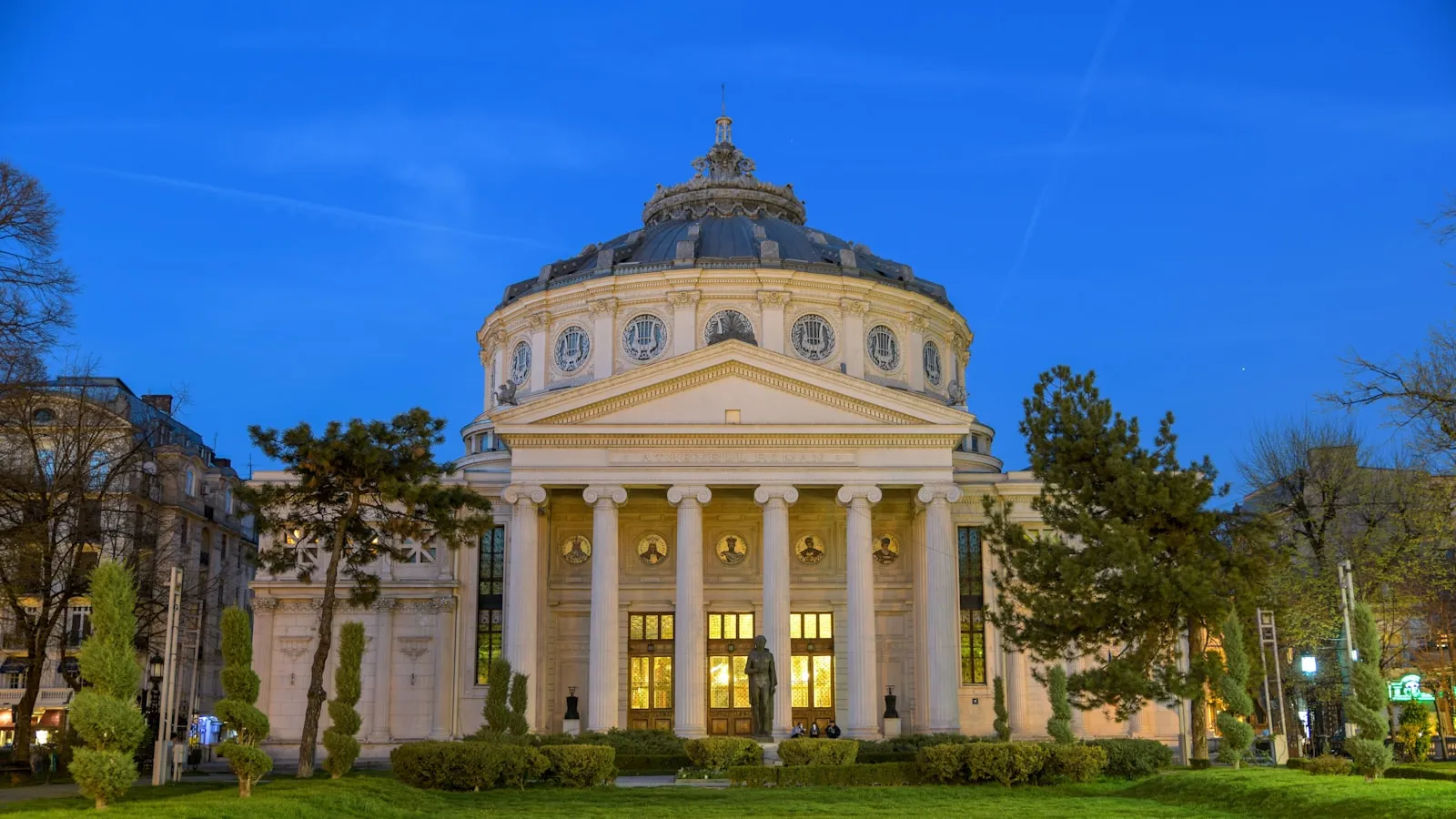
When Romania gained its independence in 1877 and crowned a king in 1881, the newly sovereign state embarked on an ambitious building program. French was the language of the Romanian elite, French was the language of diplomacy, and French architecture became the language of the new Bucharest. The government commissioned architects directly from Paris: Albert Galleron designed the Romanian Athenaeum (1888), while Paul Gottereau designed the CEC Palace (1900) and the National Bank of Romania.
Boulevard Mania — When Bucharest Copied Paris
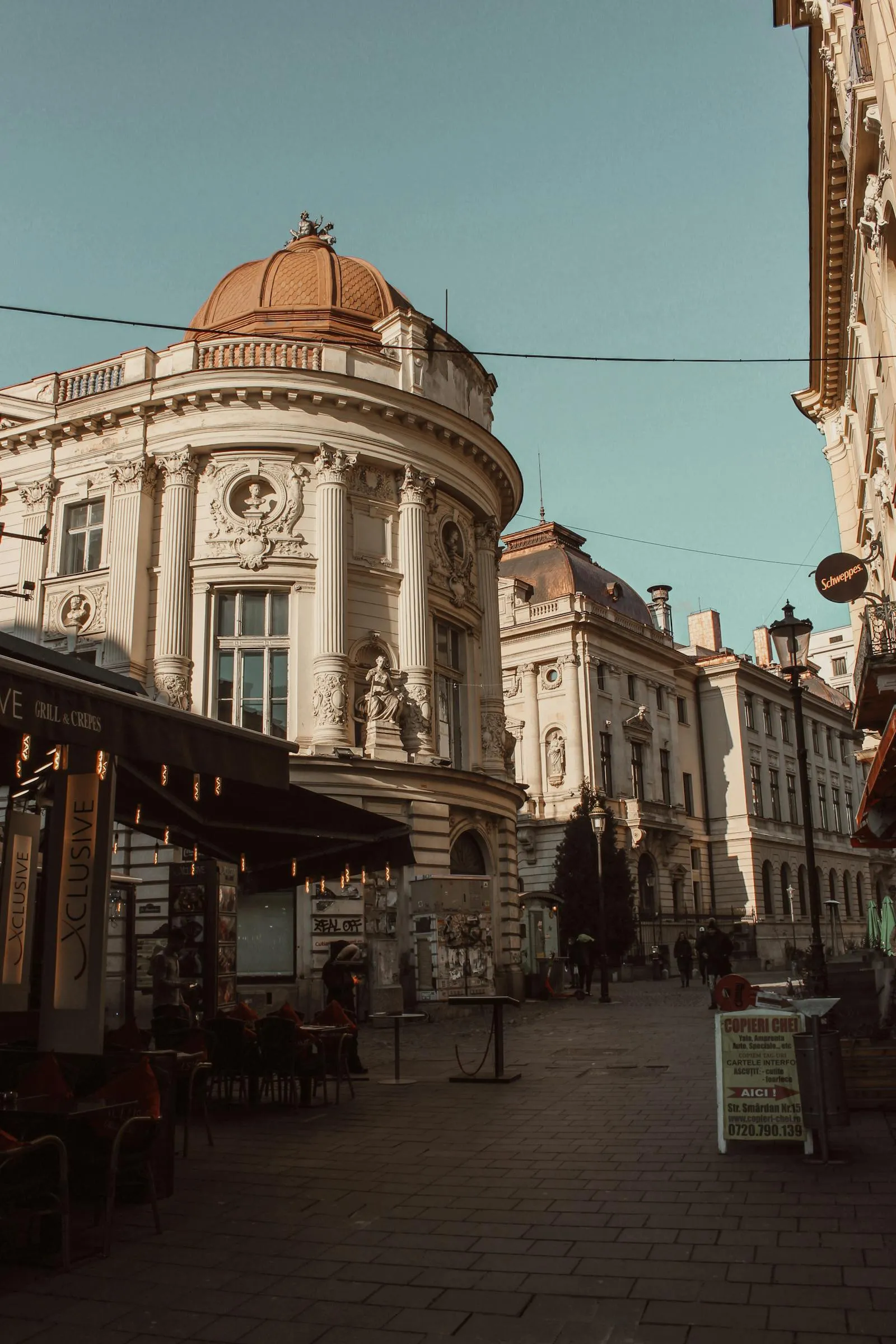
Just as Baron Haussmann had sliced wide boulevards through medieval Paris, Bucharest planners created their own grand avenues. Calea Victoriei (Victory Avenue) became the Champs-Elysees of Bucharest — a tree-lined showcase of neoclassical facades, luxury shops, and grand hotels stretching from the Old Court to Piata Victoriei.
Bulevardul Elisabeta, Bulevardul Magheru, and the radial streets around Piata Universitatii were all designed on the Parisian model of wide, straight arteries converging on circular plazas. The resemblance was not accidental — several of the city's chief planners had studied at the Ecole des Beaux-Arts in Paris.
The Romanian architect Ion Mincu — often called the father of Romanian architectural style — blended French Beaux-Arts techniques with local Romanian motifs, creating a distinctive "Neo-Romanian" style that can still be seen in buildings like the School of Architecture on Strada Academiei and the Lahovari House.
The Belle Epoque Heyday (1900-1938)
The golden age of "Little Paris" reached its peak in the interwar period (1918-1940). Romania had doubled in size after World War I, oil revenues were pouring in, and Bucharest became a genuine European capital of culture. The city had opera houses, concert halls, literary salons, and a nightlife that attracted visitors from across the continent.
This was the era of grand cafes like Capsa (founded 1868, still operating) and the Athenaeum Palace Hotel, where European diplomats and artists gathered. Writers like Paul Morand and Olivia Manning set novels in interwar Bucharest, capturing its Parisian atmosphere.
What "Little Paris" Looked Like in Its Heyday
Calea Victoriei — Bucharest's Champs-Elysees
Calea Victoriei was the spine of "Little Paris." Running roughly north-south through the city center, it was lined with the mansions of the aristocracy, the headquarters of every major bank, and the grandest hotels. On a Sunday afternoon in the 1920s, you would have seen horse-drawn carriages and early automobiles parading along its length, while well-dressed Bucharestians strolled past shop windows displaying the latest fashions from Paris.
Today Calea Victoriei remains Bucharest's most architecturally significant street. Walking it from Piata Revolutiei south to the Old Town takes about 20 minutes and passes a dozen major Belle Epoque landmarks. It is now partly pedestrianized on weekends, making it the best single street for understanding the "Little Paris" legacy.
The Romanian Athenaeum and the Concert Hall Society
The Romanian Athenaeum, completed in 1888 by French architect Albert Galleron, is perhaps the single building that best embodies the "Little Paris" ideal. Its neoclassical rotunda, Ionic columns, and 70-meter interior fresco telling the story of Romanian history made it a cultural monument from the day it opened. The building was funded by public subscription under the slogan "Donate one leu for the Athenaeum" — a crowdfunding campaign 130 years before Kickstarter.
Grand Cafes and the Social Scene
Like Paris, Bucharest's intellectual and social life revolved around its cafes. Casa Capsa on Calea Victoriei (founded 1868) was where politicians cut deals and poets read verse — the Romanian equivalent of Cafe de Flore. The Athenaeum Palace Hotel hosted foreign dignitaries, while smaller cafes along Lipscani street served the merchant class.
Why Did "Little Paris" Disappear?
World War II Damage
Bucharest suffered Allied bombing raids in 1944 targeting its oil infrastructure, which damaged parts of the city center. The German retreat and subsequent Soviet occupation further degraded the urban fabric. Many Belle Epoque buildings were damaged but repairable — the greater destruction came later.
Communism and Ceausescu's Demolitions (1977-1989)
The 1977 earthquake (7.2 magnitude) damaged many historic buildings, giving the communist regime a pretext for demolition rather than restoration. But the real devastation came in the 1980s, when dictator Nicolae Ceausescu launched his sistematizare (systematization) program — the most extensive peacetime urban demolition in European history.
To build his monumental Centrul Civic (Civic Center) and the Palace of the Parliament, Ceausescu razed approximately 8 square kilometers of historic Bucharest — roughly one-fifth of the city center. An estimated 40,000 buildings were demolished, including churches, monasteries, synagogues, Art Deco houses, and hundreds of Belle Epoque villas. Entire neighborhoods — Uranus, Antim, parts of Rahova — were wiped from the map.
What Survived
Despite the destruction, a remarkable amount of Belle Epoque Bucharest survived. The northern part of Calea Victoriei was largely spared, as were neighborhoods like Cotroceni, parts of Dorobanti, and the area around the Romanian Athenaeum. Today, Bucharest still has one of the largest collections of interwar architecture in Eastern Europe — it is just harder to see because communist-era apartment blocks now tower over many of the surviving buildings.
Little Paris Today — What You Can Still See
Belle Epoque Buildings Still Standing
The best-preserved clusters of Belle Epoque architecture in Bucharest are found along Calea Victoriei (between Piata Revolutiei and Piata Victoriei), in the Cotroceni neighborhood, along Boulevard Dacia, and in parts of the Old Town. Key buildings include:
- Romanian Athenaeum (1888) — Neoclassical concert hall by Albert Galleron
- CEC Palace (1900) — Beaux-Arts banking hall by Paul Gottereau
- Cantacuzino Palace (1906) — Now the George Enescu Museum
- Central University Library (1895) — French Renaissance style
- Sutu Palace (1834) — Neoclassical, now the Bucharest Municipality Museum
- Cotroceni Palace (1895) — Presidential residence, partly open to visitors
- Stavropoleos Monastery (1724) — Pre-Belle Epoque, but essential to the Old Town walk
The Little Paris Museum (Muzeul Micul Paris)
This small, privately-run museum on Calea Victoriei recreates the atmosphere of turn-of-the-century Bucharest through photographs, period furniture, and household objects. It offers an intimate glimpse into the daily life of the "Little Paris" era and is worth a 30-minute visit if you are walking Calea Victoriei.
A Self-Guided "Little Paris" Walking Route
This route takes about 2 hours at a comfortable pace and covers the highest concentration of Belle Epoque landmarks in the city. Start at Piata Revolutiei and end at Piata Romana.
Piata Revolutiei
Begin at Revolution Square, surrounded by landmarks from every era of Bucharest — the former Royal Palace, the Romanian Athenaeum, and the balcony where Ceausescu gave his final speech.
CEC Palace
The headquarters of Romania's oldest savings bank, designed by French architect Paul Gottereau in 1900. Its glass dome and ornate facade exemplify Beaux-Arts grandeur.
Pasajul Macca-Vilacrosse
A fork-shaped covered passage from 1891, inspired by the Parisian arcades. Today it houses cafes and hookah bars under its yellow glass canopy.
Strada Lipscani & Old Town
The commercial heart of 19th-century Bucharest, named after merchants who traded with Leipzig. Many facades here date to the Belle Epoque, now housing restaurants and bars.
Cantacuzino Palace (George Enescu Museum)
A masterpiece of French Belle Epoque architecture designed by Ion Berindei in 1906 for Gheorghe Grigore Cantacuzino, Bucharest's richest mayor. The wrought-iron canopy over the entrance is spectacular.
Piata Romana
Finish at Piata Romana, where the Belle Epoque architecture along Magheru Boulevard begins — a stretch of Art Deco and interwar buildings that complete the "Little Paris" story.
Piata Revolutiei
Begin at Revolution Square, surrounded by landmarks from every era of Bucharest — the former Royal Palace, the Romanian Athenaeum, and the balcony where Ceausescu gave his final speech.
CEC Palace
The headquarters of Romania's oldest savings bank, designed by French architect Paul Gottereau in 1900. Its glass dome and ornate facade exemplify Beaux-Arts grandeur.
Pasajul Macca-Vilacrosse
A fork-shaped covered passage from 1891, inspired by the Parisian arcades. Today it houses cafes and hookah bars under its yellow glass canopy.
Strada Lipscani & Old Town
The commercial heart of 19th-century Bucharest, named after merchants who traded with Leipzig. Many facades here date to the Belle Epoque, now housing restaurants and bars.
Cantacuzino Palace (George Enescu Museum)
A masterpiece of French Belle Epoque architecture designed by Ion Berindei in 1906 for Gheorghe Grigore Cantacuzino, Bucharest's richest mayor. The wrought-iron canopy over the entrance is spectacular.
Piata Romana
Finish at Piata Romana, where the Belle Epoque architecture along Magheru Boulevard begins — a stretch of Art Deco and interwar buildings that complete the "Little Paris" story.

Is Bucharest Still Like Paris?
Honestly — not at first glance. The communist era left Bucharest with a skyline of concrete apartment blocks that looks nothing like Haussmann's Paris. Traffic is heavy, infrastructure is uneven, and many historic buildings are in poor repair.
But look more carefully, especially along Calea Victoriei and in neighborhoods like Cotroceni, and the resemblance reappears. The grand facades, the wrought-iron balconies, the tree-lined boulevards, the cafe terraces — they are all still there, if sometimes hiding behind scaffolding or next to a communist-era block.
In recent years, a growing restoration movement has been repairing and repurposing Belle Epoque buildings. Art galleries, co-working spaces, and boutique hotels have moved into former aristocratic homes. The "Little Paris" identity is making a comeback — not as a copy of Paris, but as something uniquely Bucharest: a city that wears its contradictions openly, and is more interesting for it.
For a deeper look at the architectural layers that make Bucharest unique, see our Bucharest Architecture Guide. For the full timeline of how the city evolved, read our History of Bucharest.
Frequently Asked Questions
Why is Bucharest called "Little Paris"?
Bucharest was nicknamed "Little Paris" (Micul Paris) in the late 19th and early 20th century because Romanian elites — many educated in France — redesigned the city with wide Parisian-style boulevards, neoclassical architecture, and a vibrant cafe culture. Architects like Albert Galleron and Joseph Boycidie designed landmark buildings modeled on Parisian originals.When did Bucharest get the nickname "Little Paris"?
The nickname emerged in the 1860s-1880s during the reign of King Carol I, when Bucharest underwent rapid modernization based on French urban planning. The term became widely used by the early 1900s, during the Belle Epoque golden age that lasted until World War II.Is Bucharest similar to Paris?
Modern Bucharest retains traces of its Parisian influence — the Arc de Triomphe, grand boulevards like Calea Victoriei, and Belle Epoque facades — but decades of communist-era construction and earthquake damage have changed the cityscape significantly. It is more accurate to say Bucharest echoes Paris in specific streets and buildings rather than overall atmosphere.What is the Little Paris Museum in Bucharest?
Muzeul Micul Paris (The Little Paris Museum) is a small private museum on Calea Victoriei that recreates the atmosphere of late-19th-century Bucharest through photographs, period objects, and interior design. It is open to visitors and offers guided tours. Check their website for current hours.Which buildings in Bucharest are from the Belle Epoque?
The most important Belle Epoque buildings in Bucharest include the Romanian Athenaeum (1888), CEC Palace (1900), Cantacuzino Palace (now the George Enescu Museum, 1906), the Central University Library (1895), and many private residences along Calea Victoriei and Boulevard Magheru. The area between Piata Romana and Piata Revolutiei has the highest concentration.