Prices verified: March 2026
Have more questions about Sutu Palace (Palatul Sutu)? Ask Bucur.History
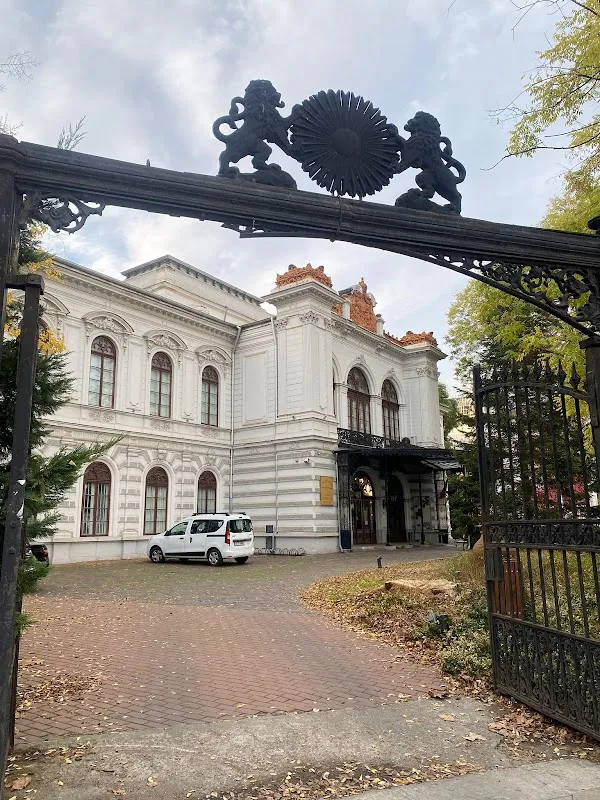
Sutu Palace was built between 1833 and 1834 for Costache Sutu, a prominent boyar (nobleman) and mayor of Bucharest. Designed by architects Johann Veit and Conrad Schwink in the neoclassical style with Gothic Revival elements, it was one of the most lavish private residences in Wallachia at the time.
The palace stands on a site with deeper roots — it was built on the location of an earlier manor belonging to the Sutu family, which in turn occupied land near the historic center of Bucharest. The building’s grand ballroom, ornate staircases, and frescoed ceilings were designed to host the social events of the Wallachian aristocracy.
In 1862, after Romania’s provinces were united, the palace was acquired by the Bucharest municipality. It has served as the Bucharest Municipality Museum (Muzeul Municipiului Bucuresti) since 1921, housing a collection that traces the city’s history from its earliest settlements to the present day.
The building was damaged by the 1977 earthquake and subsequently restored. Today it stands as one of the best-preserved examples of early 19th-century aristocratic architecture in Bucharest, right in the heart of the city.
What to See
- The neoclassical facade — an elegant composition of columns, arched windows, and decorative stonework, best appreciated from across Bulevardul I.C. Bratianu
- The grand staircase and ballroom — the finest interior spaces, with original frescoes and ornamental plasterwork from the 1830s
- Bucharest history exhibits — maps, documents, photographs, and artifacts tracing the city from a medieval trading post to a modern capital
- Period furniture and decorative arts — original 19th-century furniture and household objects from Bucharest’s aristocratic families
- Temporary exhibitions — the museum regularly hosts rotating exhibitions on urban history, photography, and cultural heritage
- The courtyard garden — a small but pleasant green space behind the palace, a quiet escape from the busy boulevard
Tips for Visiting
The location is unbeatable. Sutu Palace sits right at Piata Universitatii, one of Bucharest’s most central intersections. You can walk to it from almost anywhere in the city center.
Pair the building with the collection. The architecture is as much a draw as the exhibits. Pay attention to the ceilings, the staircase, and the ballroom — these spaces tell their own story about how Bucharest’s elite lived in the 1830s.
Check for temporary exhibitions. The museum’s rotating shows are often excellent and cover aspects of Bucharest history that the permanent collection does not.
Getting there: Universitate metro station (M2) is literally a 3-minute walk. The palace is on Bulevardul I.C. Bratianu, facing Piata Universitatii.
Combine with: The Old Town is a 5-minute walk south. The CEC Palace and Calea Victoriei are a few minutes west. Revolution Square and the Romanian Athenaeum are 10 minutes north on foot.
Is It Worth It?
Sutu Palace is a satisfying short visit — the kind of place you can walk into for an hour, appreciate the architecture, learn something about Bucharest’s past, and walk out feeling the trip was worthwhile. It does not have the scale of the Palace of Parliament or the drama of Revolution Square, but it offers something they cannot: an intimate window into how Bucharest’s 19th-century aristocracy actually lived. The location makes it effortless to include in any central Bucharest itinerary.
A Glimpse into the Past
Bulevardul Ion C. Bratianu near University Square in the interwar period -- Palatul Sutu stands at this intersection, where it has anchored the square since 1834
Photo: Neoclassicism Enthusiast · CC BY-SA 4.0 · Wikimedia Commons
The Ion C. Bratianu Monument in University Square, interwar period -- Palatul Sutu overlooks this square where the monument to the liberal statesman once stood
Photo: Neoclassicism Enthusiast · CC BY-SA 4.0 · Wikimedia Commons
Bulevardul I.C. Bratianu 2, Sector 3, Bucuresti
Open in Google Maps