Why Bucharest's Architecture Is Unique
Bucharest is not a city with a single architectural identity. Unlike Vienna (Baroque), Barcelona (Modernisme), or Paris (Haussmann), Bucharest is defined by the collision of eras. A 16th-century monastery sits next to an Art Deco apartment block, which sits next to a communist-era housing tower, which sits next to a glass-and-steel office building. The result is jarring to some and fascinating to others — but it is never boring.
This layering happened because Bucharest was repeatedly rebuilt rather than gradually evolved. The Ottomans never imposed their style as they did in Istanbul. The French-educated elite of the 1800s tore down the old to build the new. The communists demolished the Belle Epoque to build the monumental. And the post-1989 era added glass towers with little regard for context. Each generation erased parts of the previous one while leaving enough behind to create today's extraordinary palimpsest.
The 6 Architectural Eras of Bucharest
1. Medieval and Ottoman (14th-18th Century)
Very little medieval architecture survives in Bucharest. The oldest secular structure is Curtea Veche (the Old Princely Court), where Vlad III (the Impaler) issued a document in 1459 that constitutes Bucharest's first written mention. What remains are foundations, partial walls, and an archaeological site that gives a sense of scale but requires imagination.
The Ottoman period left a stronger mark through religious architecture. The Brancovenesc style — named after Prince Constantin Brancoveanu (r. 1688-1714) — blends Byzantine structure with Renaissance and Ottoman decorative elements. Stavropoleos Monastery (1724) is the finest example: its carved stone portal, painted porch, and intimate courtyard are among the most photographed spots in Bucharest.
2. Neo-Classical and Eclectic (1830s-1870s)
After the end of Ottoman suzerainty, Romanian rulers looked west. The Organic Regulations of the 1830s introduced Western-style urban planning, and European architects arrived to build public institutions. Palatul Sutu (1834), now the Bucharest Municipality Museum, is a pure neoclassical design. The National Theatre site and early institutional buildings along Calea Victoriei date from this transitional period.
3. Belle Epoque and Beaux-Arts (1880s-1914)
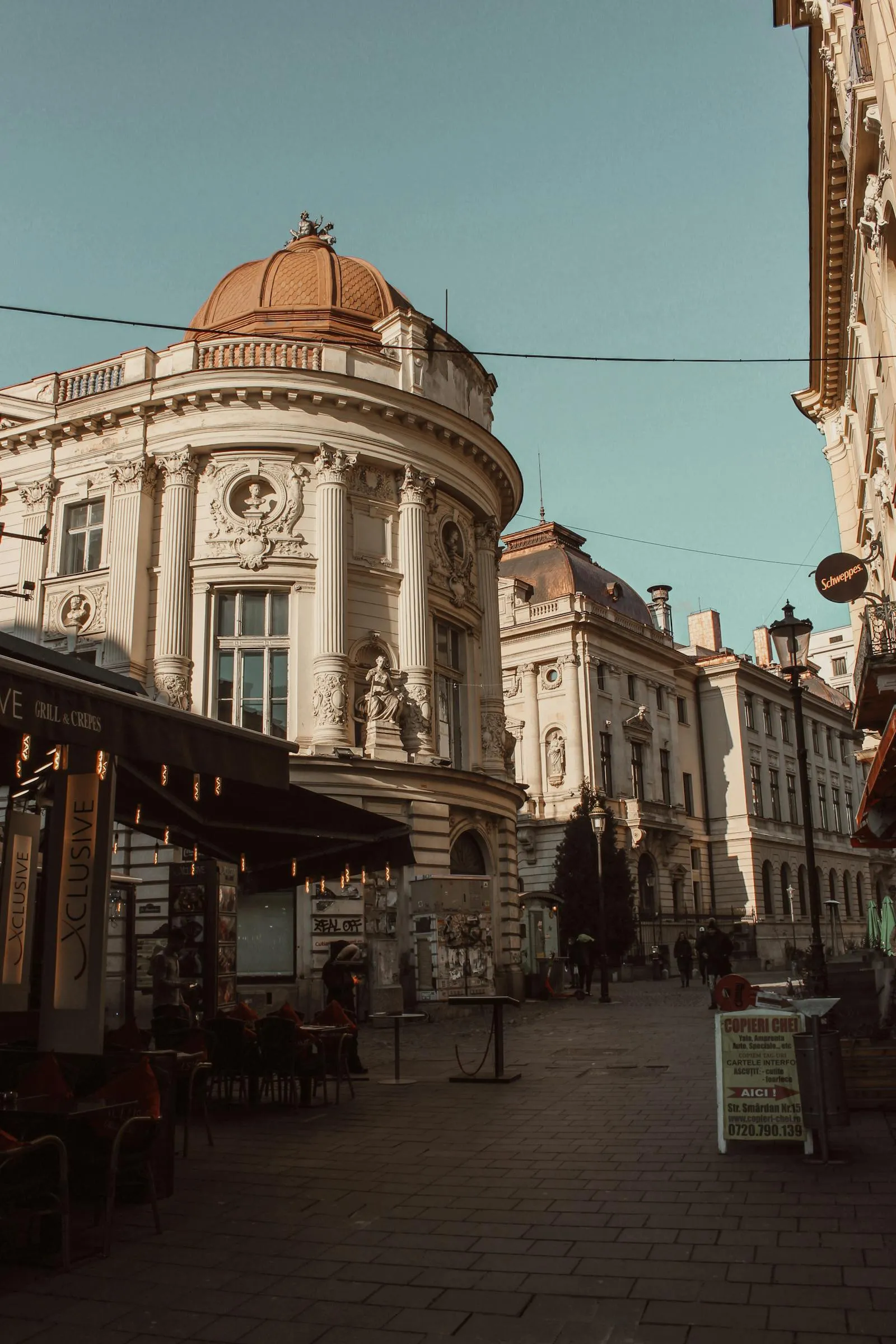
This is the era that gave Bucharest its "Little Paris" nickname. French architects designed the city's most iconic buildings: Albert Galleron's Romanian Athenaeum (1888) and Paul Gottereau's CEC Palace (1900) are the two masterpieces. Romanian architects trained in Paris — including Ion Mincu, Petre Antonescu, and Ion Berindei — developed a distinctive "Neo-Romanian" style that merged French Beaux-Arts techniques with local folk motifs.
4. Art Nouveau, Art Deco and Modernism (1900s-1940s)
The interwar period (1918-1940) brought Art Nouveau, Art Deco, and early Modernism to Bucharest. Bulevardul Magheru became one of Europe's finest Art Deco streetscapes, with apartment buildings featuring geometric facades, rounded corners, and Streamline Moderne details. The telephone exchange building (Palatul Telefoanelor, 1934) is a standout Art Deco landmark. Private residences along Bulevardul Dacia and in the Cotroceni neighborhood show Art Nouveau floral motifs and wrought-iron work.
Horia Creanga, Marcel Iancu (who had co-founded the Dada movement in Zurich), and GM Cantacuzino were among the Romanian architects who brought Modernist ideas to Bucharest. Their residential buildings and cinemas — some still standing — gave the city a progressive, cosmopolitan character.
5. Socialist Realism and Communist Brutalism (1948-1989)
Communist-era architecture in Bucharest came in two waves. The early period (1948-1965) produced Socialist Realist buildings — monumental, symmetrical, and decorated with classical motifs meant to project Soviet-style authority. Casa Presei Libere (1956), modeled on Moscow's Lomonosov University, is the prime example.
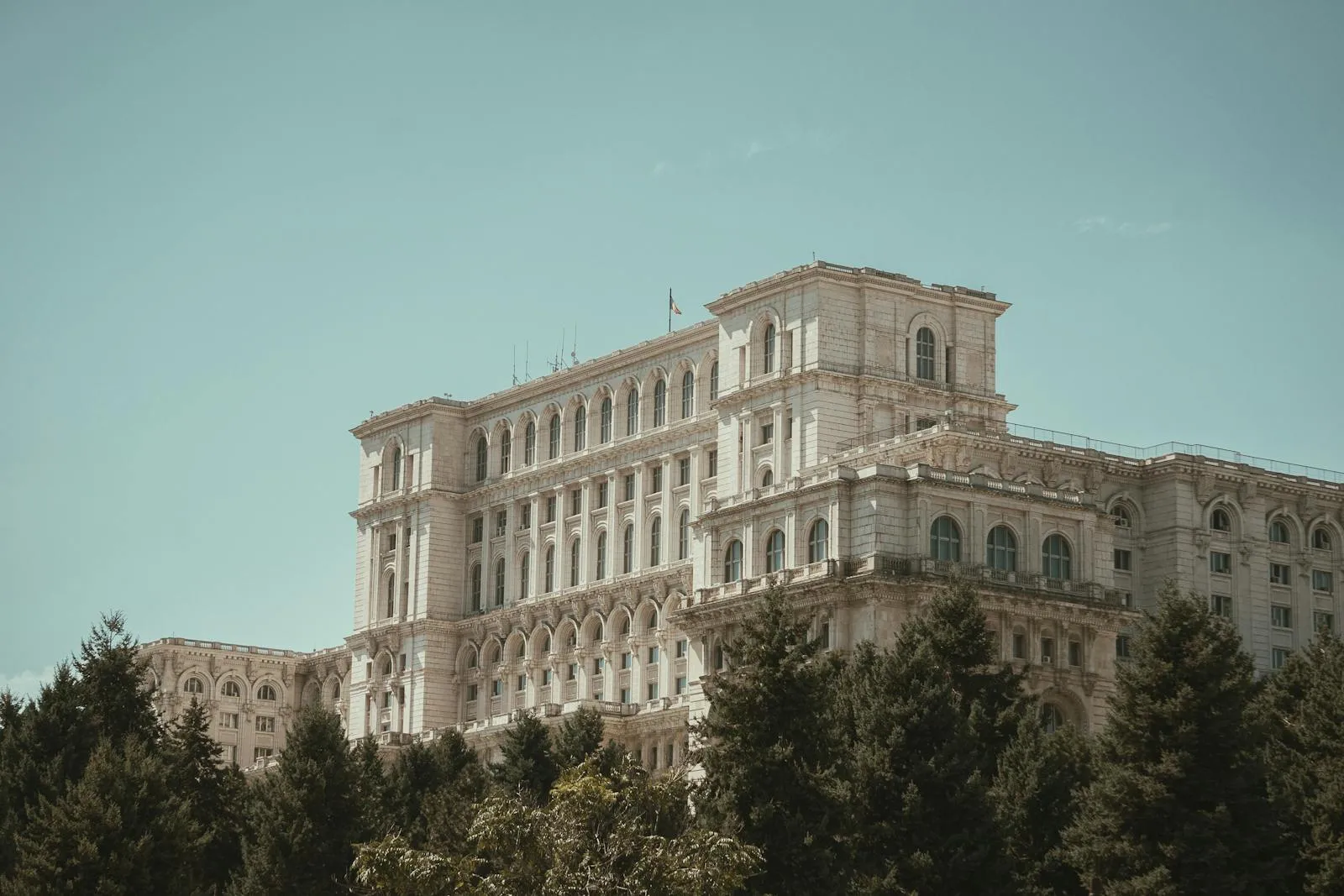
The second wave, under Ceausescu (1965-1989), was more destructive. The Palace of the Parliament (begun 1984) and the Centrul Civic district required the demolition of approximately 8 square kilometers of historic Bucharest. Designed by architect Anca Petrescu when she was just 28, the Palace is a hybrid of Stalinist monumentalism and neoclassical excess — 1,100 rooms, 365,000 square meters, and the heaviest building on Earth.
6. Post-Communist and Contemporary (1990-Present)
After 1989, Bucharest experienced a chaotic building boom with little planning oversight. Office towers, shopping malls, and residential developments went up with varying degrees of architectural quality. The results are mixed: some buildings, like the Bucharest National Library (opened 2012 on the site of the old one, burned in 1989), attempt to bridge old and new. Others ignore their context entirely.
In recent years, a more thoughtful approach has emerged. Adaptive reuse projects have converted industrial buildings and aristocratic villas into cultural spaces, co-working hubs, and boutique hotels. The creative district around Carol Park and the renovation of buildings along Calea Victoriei suggest that Bucharest may finally be finding an architectural voice that respects its layered past.
The Most Architecturally Significant Buildings in Bucharest
| Building | Style | Year | Visitor Access |
|---|---|---|---|
| Romanian Athenaeum | Neo-Classical | 1888 | Concert evenings + tours |
| CEC Palace | Beaux-Arts | 1900 | Exterior only (active bank) |
| Cantacuzino Palace | French Belle Epoque | 1906 | Museum (George Enescu) |
| Stavropoleos Monastery | Brancovenesc | 1724 | Open daily (free) |
| Palace of the Parliament | Communist Baroque | 1984-1997 | Guided tours daily |
| Palatul Telefoanelor | Art Deco | 1934 | Exterior only |
| Casa Presei Libere | Socialist Realism | 1956 | Limited (media offices) |
| Arc de Triomphe | Triumphal Arch | 1936 | Open seasonally |
| Curtea Veche (Old Court) | Medieval | 15th century | Open daily |
| Cotroceni Palace | Neo-Classical | 1895 | By appointment (museum wing) |
The Romanian Athenaeum — Neo-Classical Masterpiece
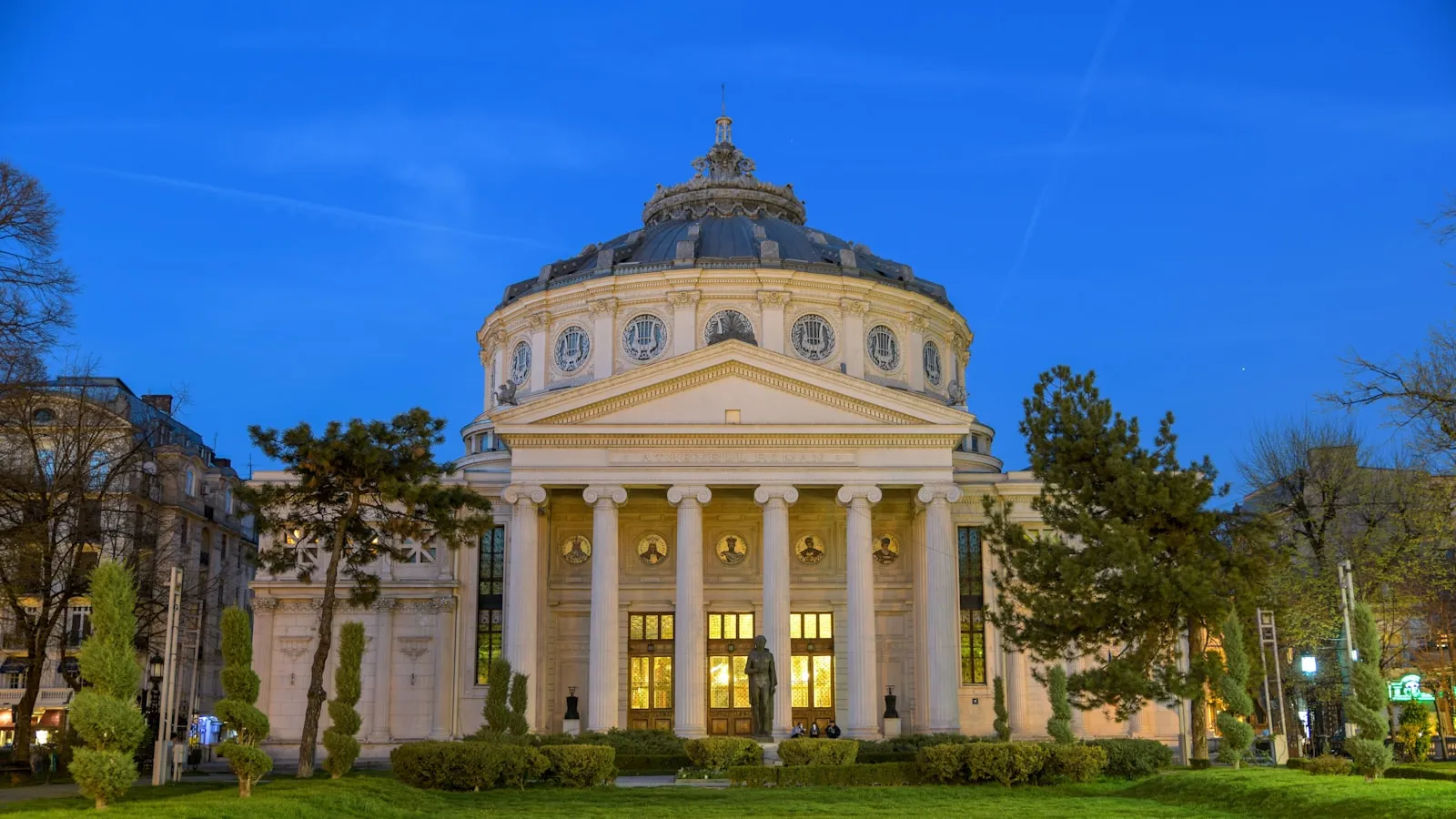
Designed by French architect Albert Galleron, the Romanian Athenaeum (1888) is Bucharest's most beloved building. Its Ionic-columned portico, 41-meter-high dome, and 70-meter-long interior fresco depicting Romanian history make it both an architectural and patriotic landmark. The Athenaeum hosts the George Enescu Philharmonic and is the venue for the biennial George Enescu Festival — one of Europe's major classical music events.
CEC Palace — Beaux-Arts Banking Architecture
Paul Gottereau's CEC Palace (1900) faces the National History Museum across Calea Victoriei. Its massive glass dome, ornamental columns, and facade sculptures represent the confidence of turn-of-the-century Bucharest. It remains a working bank — you can enter the main hall during business hours to see the interior, but photography is restricted.
The Palace of Parliament — Communist Baroque at Scale
The Palace of the Parliament is difficult to describe in normal architectural terms. At 365,000 square meters, it is the world's heaviest building and second-largest administrative building after the Pentagon. Architect Anca Petrescu designed it in a style sometimes called "Communist Baroque" — marble, crystal chandeliers, gold leaf, and vast halls that exist to overwhelm through sheer scale. Daily guided tours are available and are the single most popular tourist activity in Bucharest.
Cantacuzino Palace — French Belle Epoque
Built in 1906 by architect Ion Berindei for Gheorghe Grigore Cantacuzino (a former Prime Minister nicknamed "The Nabob" for his wealth), this palace on Calea Victoriei now houses the George Enescu Museum. Its wrought-iron Art Nouveau canopy over the entrance, marble staircase, and Belle Epoque interiors make it one of the best-preserved aristocratic homes in Bucharest.
The Arc de Triomphe — Bucharest's Own Symbol
Yes, Bucharest has its own Arc de Triomphe. The current version (1936), designed by Petre Antonescu, stands 27 meters high on Kiseleff Boulevard. It replaced an earlier wooden arch and was built to celebrate Romania's post-World War I unification. Sculptors including Ion Jalea and Dimitrie Paciurea contributed the relief panels.
Magheru Boulevard — Europe's Art Deco Strip
Bulevardul Magheru, running from Piata Romana to Piata Universitatii, is arguably the most important interwar architectural streetscape in Romania. Its apartment blocks — designed in the 1930s in Art Deco, Streamline Moderne, and early International Style — feature geometric facades, rounded balconies, and elegant proportions. The 1977 earthquake damaged many, and not all have been restored, but the street remains architecturally significant.
Centrul Civic — Ceausescu's Grand Vision
The area south of Piata Unirii, centered on Bulevardul Unirii (designed to be longer than the Champs-Elysees), is the communist-era Centrul Civic. Built in the 1980s at enormous human and architectural cost, its apartment blocks with marble cladding and monumental proportions were meant to project socialist grandeur. Today the boulevard has fountains, the Palace of the Parliament at its western end, and a landscape that is gradually being humanized with parks and public spaces.
How to Explore Bucharest's Architecture
The Best Self-Guided Architecture Walk in Bucharest
This route covers all 6 eras in a single walk of approximately 3 hours. Start at the medieval Curtea Veche and end at the communist Palace of the Parliament.
Curtea Veche (Old Princely Court)
Begin at the ruins of Vlad the Impaler's 15th-century court — the oldest secular structure in Bucharest and a connection to the city's medieval origins.
Stavropoleos Monastery
A gem of Brancovenesc (late Ottoman-era Romanian) architecture from 1724. The carved stone portal and painted porch show the synthesis of Byzantine, Ottoman, and local styles.
CEC Palace
Paul Gottereau's 1900 masterpiece — Beaux-Arts banking architecture with a spectacular glass dome. The epitome of Bucharest's "Little Paris" ambitions.
Romanian Athenaeum
Albert Galleron's neoclassical concert hall (1888). The columned portico and domed rotunda represent the peak of French-inspired architecture in Romania.
Magheru Boulevard
One of Europe's finest Art Deco streetscapes (1930s). The Modernist apartment buildings along this boulevard show Bucharest's interwar ambition.
Palace of the Parliament & Centrul Civic
The communist-era monumental district. The sheer scale is disorienting — the palace alone has 1,100 rooms. Love it or hate it, this is architecture at its most political.
Curtea Veche (Old Princely Court)
Begin at the ruins of Vlad the Impaler's 15th-century court — the oldest secular structure in Bucharest and a connection to the city's medieval origins.
Stavropoleos Monastery
A gem of Brancovenesc (late Ottoman-era Romanian) architecture from 1724. The carved stone portal and painted porch show the synthesis of Byzantine, Ottoman, and local styles.
CEC Palace
Paul Gottereau's 1900 masterpiece — Beaux-Arts banking architecture with a spectacular glass dome. The epitome of Bucharest's "Little Paris" ambitions.
Romanian Athenaeum
Albert Galleron's neoclassical concert hall (1888). The columned portico and domed rotunda represent the peak of French-inspired architecture in Romania.
Magheru Boulevard
One of Europe's finest Art Deco streetscapes (1930s). The Modernist apartment buildings along this boulevard show Bucharest's interwar ambition.
Palace of the Parliament & Centrul Civic
The communist-era monumental district. The sheer scale is disorienting — the palace alone has 1,100 rooms. Love it or hate it, this is architecture at its most political.
Guided Architecture Tours
Several organizations offer guided architecture tours in Bucharest. The Bucharest Architects' Association runs occasional weekend walks focused on specific eras. Free walking tours (tip-based) that include architectural commentary depart daily from the Old Town. For specialized tours of the Palace of the Parliament, book directly through the Palace's official website — tours run daily and last approximately 1 hour.
Photography Tips
The best light for photographing Bucharest's Belle Epoque facades is in the early morning (before 8 AM) or late afternoon (after 5 PM), when the low sun illuminates the ornamental details. Calea Victoriei faces roughly north-south, so morning light hits the eastern facades and evening light the western ones. For the Palace of the Parliament, the best vantage point is from the east side, across Piata Constitutiei, where you can capture the full facade in afternoon light.

Frequently Asked Questions
What architectural styles can you see in Bucharest?
Bucharest has six major architectural eras visible today: Medieval/Ottoman (14th-18th century), Neo-Classical/Eclectic (1830s-1870s), Belle Epoque/Beaux-Arts (1880s-1914), Art Nouveau/Art Deco/Modernism (1900s-1940s), Socialist Realism/Communist Brutalism (1948-1989), and Post-Communist Contemporary (1990-present). You can see examples of all six in a single walk through the city center.What is the most famous building in Bucharest?
The Palace of the Parliament is the most famous building in Bucharest and the heaviest building in the world. It was built by dictator Nicolae Ceausescu between 1984 and 1997, required the demolition of one-fifth of Bucharest's historic center, and remains the second-largest administrative building in the world after the Pentagon. Guided tours are available daily.Where is the best place to see Art Nouveau architecture in Bucharest?
The best Art Nouveau architecture in Bucharest is concentrated along Bulevardul Dacia, Strada Dionisie Lupu, and in the Cotroceni neighborhood. Notable examples include residences with floral motifs, wrought-iron balconies, and colorful ceramic tiles. The area between Piata Romana and Piata Victoriei also has significant Art Nouveau buildings.Why does Bucharest have communist-era architecture?
Romania was a communist state from 1947 to 1989. During this period, especially under Nicolae Ceausescu (1965-1989), the government built massive civic buildings, housing blocks, and boulevards in the Socialist Realist and Brutalist styles. The most dramatic example is the Centrul Civic area, built by demolishing a large section of historic Bucharest in the 1980s.Can you do a self-guided architecture tour in Bucharest?
Yes. The best self-guided route starts at Curtea Veche (the Old Court, medieval), walks north along Calea Victoriei past Belle Epoque and Beaux-Arts landmarks, continues to Piata Romana for Art Deco buildings on Magheru Boulevard, then south to see the Palace of the Parliament and Centrul Civic for communist-era architecture. Allow 3 hours at a comfortable pace.