Prices verified: March 2026
Have more questions about Stavropoleos Monastery? Ask Bucur.History
Built in 1724 during the reign of Nicholas Mavrocordatos, the church was founded by Greek monk Ioannikios Stratonikeas from Pogoniani. In 1726, abbot Ioannikios was elected metropolitan of Stavropolis and exarch of Caria, and the monastery was named “Stavropoleos” after the old episcopal seat.
The inn and monastery annexes were demolished at the end of the 19th century. Over time, the church suffered earthquake damage that caused the dome to fall. It was carefully restored and today serves as an active Eastern Orthodox monastery for nuns.
One of the monastery’s constant cultural contributions is its dedication to Byzantine music, expressed through its renowned choir and the largest collection of Byzantine music books in Romania.
What to See
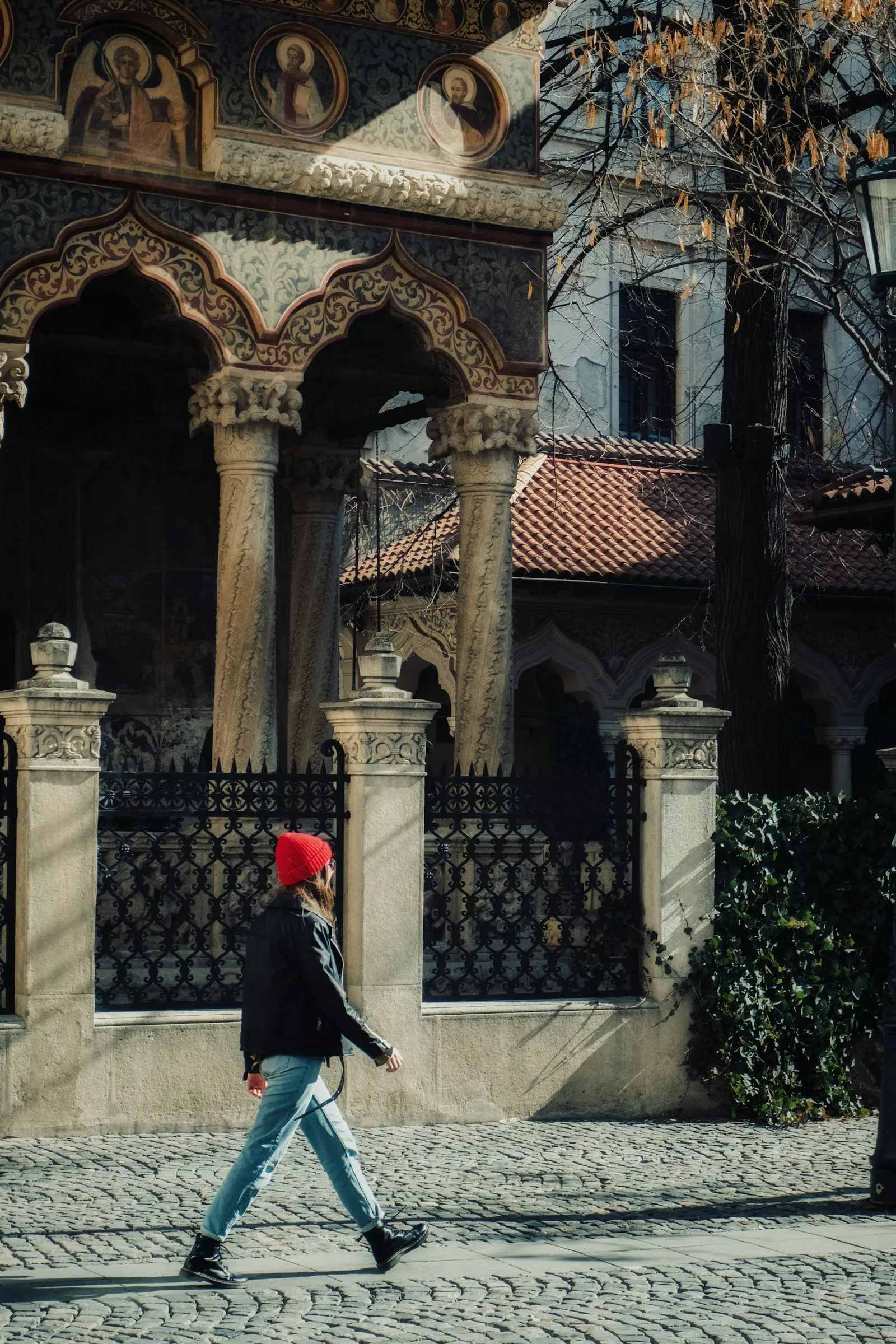
- The ornate Brancovenesc-style facade — carved stone work that blends Byzantine, Ottoman, Renaissance, and Baroque elements in Romania’s unique architectural style
- The intimate interior with original frescoes and icons
- The peaceful cloister courtyard — a hidden garden with stone carvings and greenery, not visible from the street
- Romania’s largest collection of Byzantine music books
- The monastery’s Byzantine choir — if you are fortunate enough to hear them performing
“Step through the gate and the noise of Lipscani disappears. The courtyard is one of the most peaceful places in central Bucharest.”
Tips for Visiting
Dress code: This is an active place of worship. Cover shoulders and knees. Remove hats before entering the church.
Photography: Usually permitted, but be respectful. Do not use flash.
Hours: The monastery follows a prayer schedule, so hours may vary. Contact the monastery before visiting to confirm.
The courtyard: Do not skip it. The courtyard is the hidden gem within the gem — not visible from the street, it is a small enclosed garden of extraordinary peace.
Getting there: From Universitate metro (M2), walk 7 minutes south through the Old Town. From Piata Unirii (M1, M2, M3), walk 8 minutes north. The monastery is on Strada Stavropoleos, just off the main Lipscani area.
Is It Worth It?
Stavropoleos is the antidote to Old Town excess. In twenty minutes, you can experience some of the finest Brancovenesc architecture in Romania, find a moment of genuine peace in the hidden courtyard, and leave with a deeper understanding of what makes Bucharest’s layers so fascinating. Free entry makes this an absolute essential.
A Glimpse into the Past
Stavropoleos Church in 1860 -- the exquisite Brancovenesc-style church, built in 1724, is one of the finest examples of Romanian ecclesiastical architecture
Photo: Unknown author · Public domain · Wikimedia Commons
Stavropoleos Church drawn by Carol Popp de Szathmari in 1865 -- showing the ornate Brancovenesc facade before modern restoration
Photo: Carol Popp de Szathmari · Public domain · Wikimedia Commons
Strada Stavropoleos 4, Sector 3, Bucuresti
Open in Google Maps