Key Dates in Bucharest's History
| Year | Event |
|---|---|
| 1459 | First documented mention (Vlad the Impaler) |
| 1659 | Becomes capital of Wallachia |
| 1821 | Tudor Vladimirescu uprising |
| 1848 | Romanian Revolution (liberal) |
| 1862 | Capital of United Principalities |
| 1877 | Romanian independence |
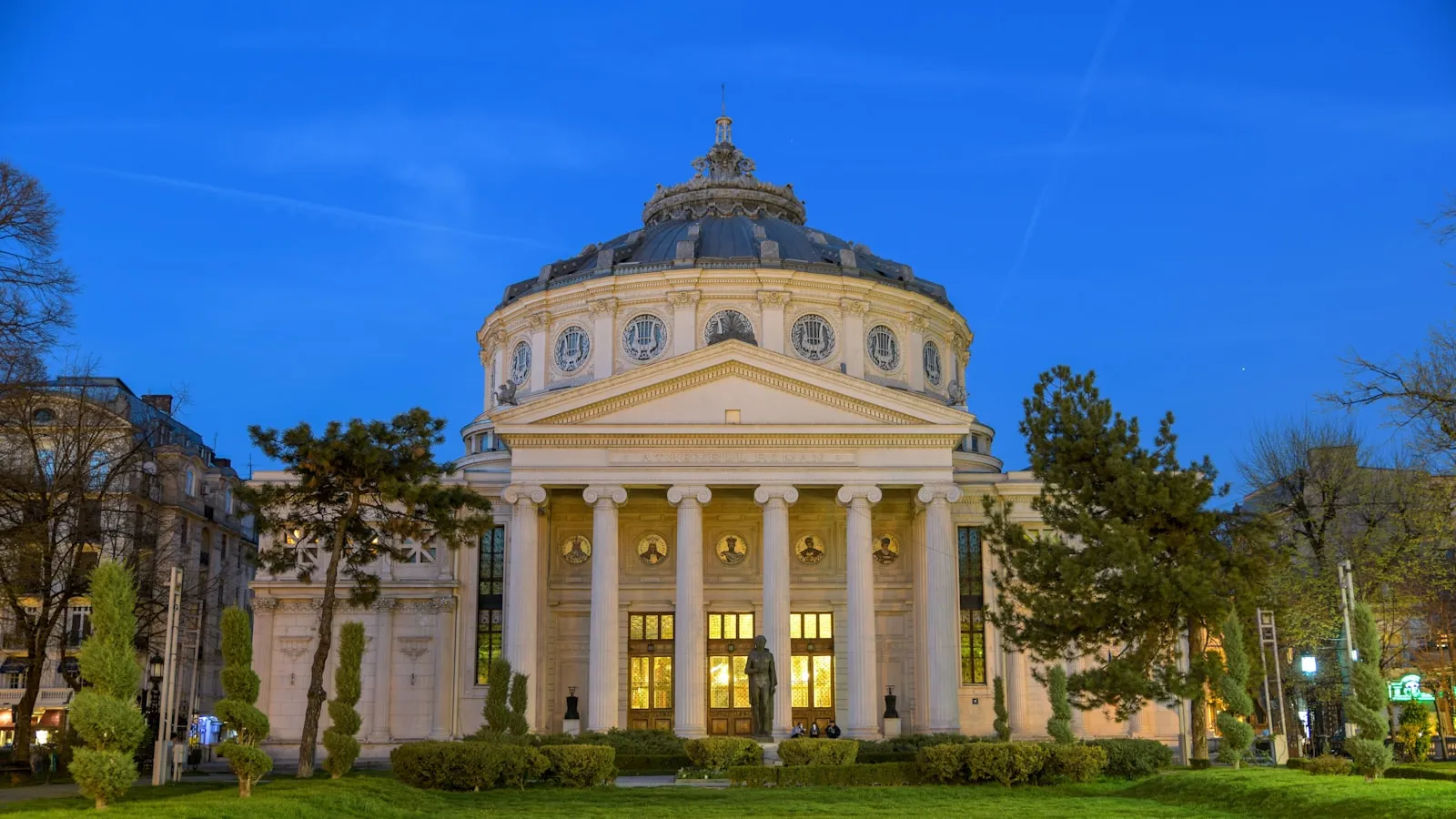
| 1888 | Romanian Athenaeum opens |
| 1918 | Greater Romania formed (post-WWI) |
| 1947 | Communist takeover |
| 1977 | Devastating earthquake (7.2 magnitude) |
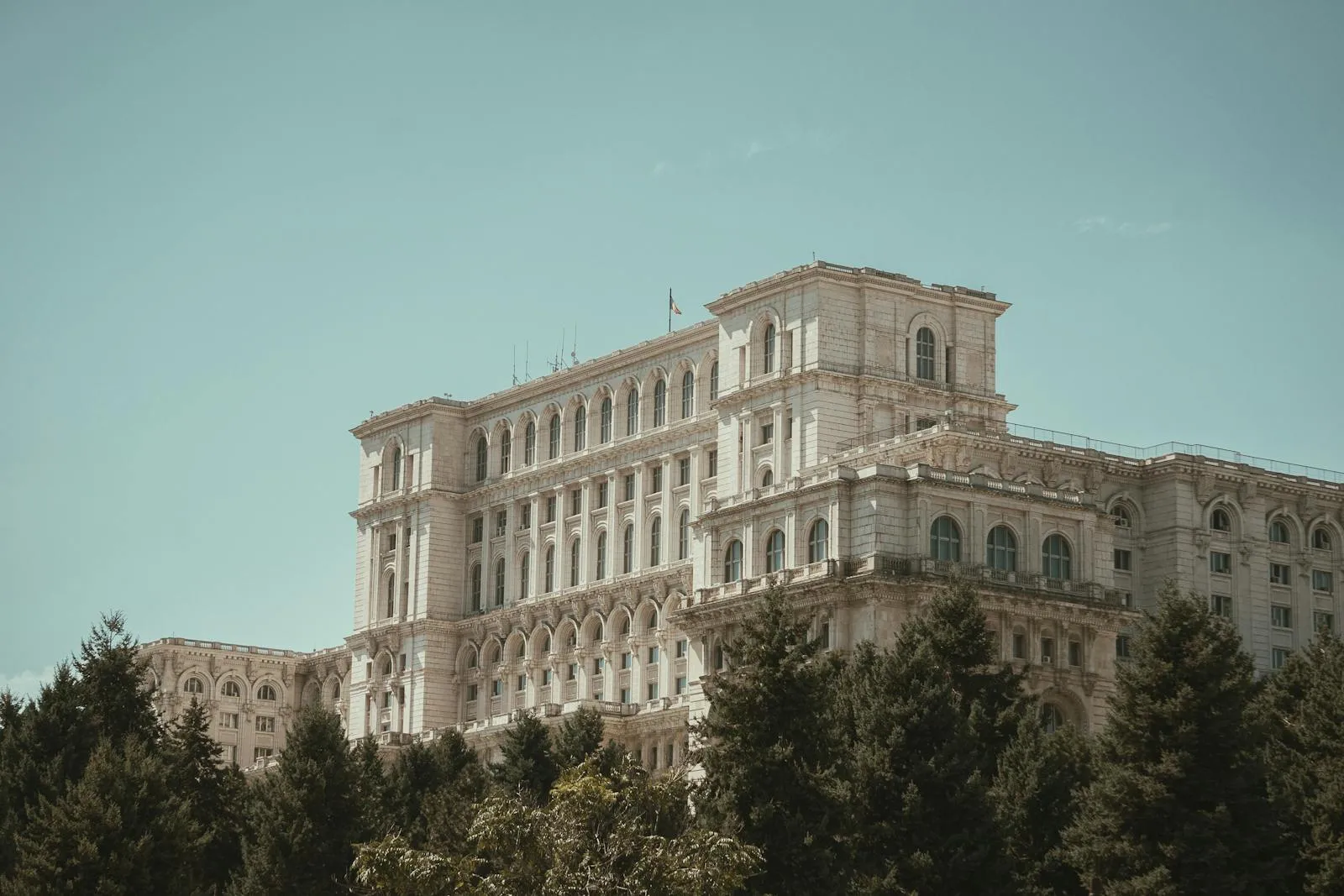
| 1984 | Palace of the Parliament construction begins |
| 1989 | Romanian Revolution ends communism |
| 2007 | Romania joins the European Union |
Origins: Before Bucharest Was a City (Prehistory-1458)
The area that is now Bucharest has been inhabited for millennia. Archaeological excavations have uncovered Dacian pottery and Roman-era coins in several locations within the modern city. The Dambovita River, which cuts through the center of Bucharest, provided water and a natural defensive position that made the area attractive to early settlers.
By the medieval period, the area was part of the principality of Wallachia, one of the three historical Romanian lands (alongside Moldavia and Transylvania). Wallachia's capital moved between several towns — Curtea de Arges, Campulung, Targoviste — before eventually settling on Bucharest. The region was dominated by the politics of survival between the Ottoman Empire to the south and the Kingdom of Hungary to the northwest.
A popular legend attributes the founding of Bucharest to a shepherd named Bucur, who supposedly settled on the banks of the Dambovita and built a church. While this makes for a charming origin story (and explains the name "Bucuresti"), there is no historical evidence for it. The name's etymology remains debated — it may derive from the Romanian word bucurie (joy), or from a personal name, or from the Albanian word bukur (beautiful).
1459 — Bucharest's First Documented Mention
Vlad the Impaler's Decree
On September 20, 1459, Vlad III — known to history as Vlad the Impaler and to legend as the inspiration for Bram Stoker's Dracula — signed a document issuing privileges to certain merchants. The document was signed "in the citadel of Bucharest" (in cetatea Bucurestilor), and this is the earliest known written reference to the city.
It is important to be factual about Vlad III. He was a real Wallachian prince (voivode) who ruled three times between 1448 and 1476. His reputation for cruelty — impaling was his signature punishment — served a political purpose: it deterred both Ottoman invaders and treacherous boyars. He was neither the fictional vampire nor a simple hero; he was a 15th-century ruler operating in a violent world. His connection to Bucharest is primarily through this document and the Old Princely Court (Curtea Veche), which he used as a residence.
From Fortress to Market Town
After Vlad's time, Bucharest grew steadily as both a princely seat and a commercial hub. Its position on the Wallachian plain, at the crossroads of trade routes between Constantinople (Istanbul), Central Europe, and the Black Sea, made it a natural marketplace. Merchants from across the region — Greeks, Turks, Saxons from Transylvania, Jews, Armenians — settled and traded here.
Life in Ottoman-Era Bucharest (16th-17th Century)
Although Wallachia was never formally incorporated into the Ottoman Empire, it paid tribute and its princes were increasingly appointed by the Sultan. Bucharest in this period was a modest town of wooden buildings, dirt roads, and churches. The Phanariot period (1711-1821), when Greek-speaking Ottoman administrators ruled from Bucharest, brought a cosmopolitan but corrupt atmosphere.
Despite the political instability, this era produced remarkable religious architecture. The Brancovenesc style, developed under Prince Constantin Brancoveanu (r. 1688-1714), combined Byzantine structural forms with Renaissance and Ottoman decorative elements. Stavropoleos Monastery (1724), though built after Brancoveanu's death, is the finest example of this synthesis.
Bucharest Becomes a Capital (17th-18th Century)
In 1659, under Prince Gheorghe Ghica, Bucharest permanently replaced Targoviste as the capital of Wallachia. This was less a grand political decision than a practical one: Bucharest was larger, better positioned for trade, and easier to defend from Ottoman pressure than the more northerly Targoviste.
By the 18th century, Bucharest had a population of roughly 50,000-60,000 — comparable to contemporary European cities like Birmingham or Munich. It was described by foreign visitors as a city of contrasts: splendid churches and monasteries alongside muddy streets, elegant boyar mansions next to wooden hovels. This pattern of extreme contrasts, interestingly, continues to define Bucharest today.
The 19th Century — Modernization and French Influence
The 1848 Revolution and Romanian National Awakening
In 1848, inspired by revolutions across Europe (and particularly by events in Paris), Romanian intellectuals in Bucharest launched their own liberal revolution. They demanded freedom of the press, abolition of serfdom, and political rights. The revolution was suppressed by a joint Ottoman-Russian intervention, but its leaders — many of them educated in France — became the architects of modern Romania.
1862 — Capital of the United Romanian Principalities
In 1859, Alexandru Ioan Cuza was elected prince of both Wallachia and Moldavia. In 1862, the two principalities formally united with Bucharest as the capital. This was the birth of the modern Romanian state. Cuza introduced sweeping reforms: land reform, secularization of monastic property, and the creation of a modern education system. Bucharest began to transform from an overgrown market town into a European capital.
King Carol I and the Belle Epoque Transformation
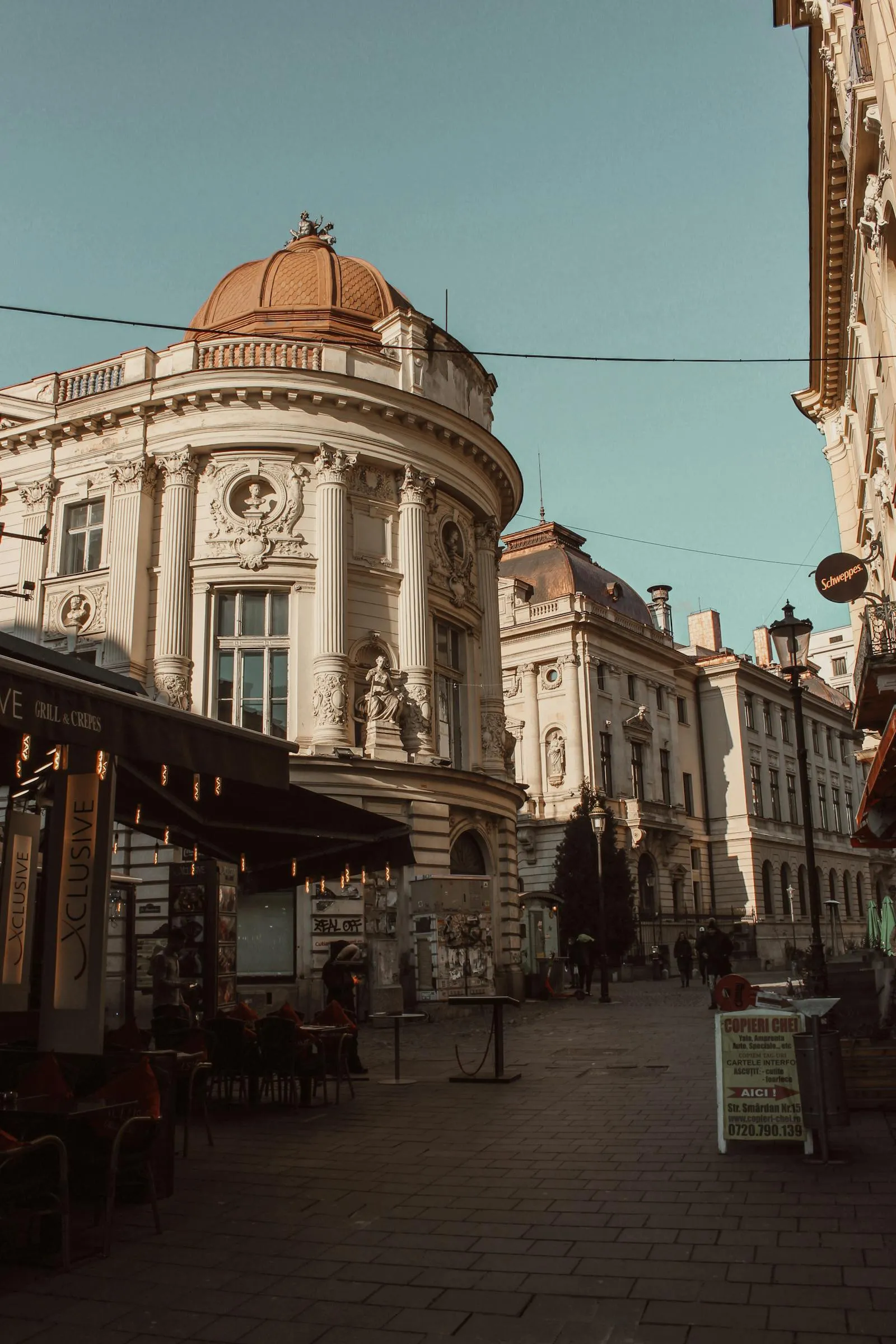
After Cuza was deposed in 1866, Romania invited a German prince — Karl of Hohenzollern-Sigmaringen — to become its ruler. As Carol I (king from 1881), he presided over the most dramatic transformation in Bucharest's history. Wide boulevards were cut through the old town, neoclassical buildings replaced wooden structures, and French-trained architects redesigned the city center.
Romania's independence from the Ottoman Empire (1877) and the proclamation of the kingdom (1881) released a wave of nation-building energy. Albert Galleron designed the Romanian Athenaeum (1888), Paul Gottereau designed the CEC Palace (1900), and the city earned its enduring nickname: "Little Paris of the East".
The Interwar Golden Age (1918-1940)
After World War I, the Treaty of Trianon (1920) more than doubled Romania's territory by incorporating Transylvania, Bessarabia, and Bukovina. Bucharest became the capital of "Greater Romania" (Romania Mare) — a nation of 18 million people, the largest country in Southeast Europe.
The interwar period was Bucharest's golden age. The city had a population of about 640,000 by 1930, and it buzzed with cultural energy. Grand cafes lined Calea Victoriei, Art Deco apartment buildings rose along Bulevardul Magheru, opera and theatre thrived, and Bucharest's nightlife attracted visitors from across the continent. This was the era captured in Olivia Manning's Balkan Trilogy — a cosmopolitan, somewhat decadent, deeply charming city.
The Romanian avant-garde flourished in interwar Bucharest. Artists like Constantin Brancusi (who had trained in Bucharest before moving to Paris), architects like Marcel Iancu (co-founder of Dada), and writers like Eugene Ionesco (who grew up in Bucharest) made Romania a surprisingly influential presence in European modernism.
World War II and Its Aftermath (1940-1947)
Romania's position in World War II was complex and morally compromised. Under the Iron Guard and then under General Ion Antonescu, Romania allied with Nazi Germany in 1940. The regime was complicit in the Holocaust — an estimated 280,000-380,000 Romanian Jews and Roma were killed. This remains a painful and important part of Bucharest's history that the city has only recently begun to formally acknowledge, including through the National Holocaust Memorial (opened 2009).
In August 1944, a coup led by King Michael I switched Romania's allegiance to the Allies. But the switch came at a cost: the Soviets, who had been fighting Romania on the Eastern Front, now occupied the country. Allied bombing raids earlier in 1944 had damaged parts of central Bucharest, particularly around the Gara de Nord (main train station) area, but the city escaped the wholesale destruction suffered by Warsaw or Berlin.
By 1947, the communists had consolidated power. King Michael was forced to abdicate on December 30, 1947, and Romania became a People's Republic. The transformation of Bucharest — from cosmopolitan "Little Paris" to a communist capital — had begun.
Communist Bucharest (1947-1989)
The communist transformation of Bucharest happened in stages. In the early years (late 1940s-1950s), the focus was on nationalization, suppression of the old elite, and Soviet-style institutional building. Casa Presei Libere (1956), modeled on Moscow's Lomonosov University, rose in the north of the city as a symbol of the new order. Housing blocks began replacing the old urban fabric.
Under Nicolae Ceausescu, who came to power in 1965, Bucharest initially experienced a relative cultural thaw. Ceausescu positioned Romania as independent from Moscow, which won him Western praise and trade deals. But by the 1970s, his rule became increasingly authoritarian, and by the 1980s, it became megalomaniacal.
Ceausescu's Systematization — The Demolitions of the 1980s
After visiting North Korea in 1971 and being impressed by Pyongyang's monumental architecture, Ceausescu conceived a plan to rebuild Bucharest as a socialist showpiece. The 1977 earthquake (7.2 magnitude, over 1,500 dead) provided both a pretext and an opportunity: damaged buildings could be demolished rather than repaired, and whole neighborhoods could be "systematized."
Starting in 1984, Ceausescu's regime demolished approximately 8 square kilometers of historic Bucharest — roughly one-fifth of the city center. An estimated 40,000 buildings were destroyed, including 19 churches, 3 monasteries, 3 synagogues, and entire neighborhoods. The Uranus neighborhood, one of the city's oldest, was completely erased. Eleven churches were moved on rails to be hidden behind apartment blocks — a surreal feat of engineering that was both technically impressive and morally grotesque.
The Palace of Parliament — A City Within a City
The purpose of the demolitions was to create space for the Palace of the Parliament (originally called the "House of the People") and its surrounding Centrul Civic. Designed by architect Anca Petrescu at the age of 28, the Palace is 365,000 square meters — the heaviest building in the world and the second-largest administrative building after the Pentagon.
The project consumed roughly one-third of Romania's GDP during the 1980s, a period when ordinary Romanians faced food rationing, heating cuts, and power blackouts. Ceausescu was executing the nation's resources into marble, crystal chandeliers, and gold leaf while his people stood in bread lines. The Palace was not completed when the revolution came in December 1989.
The 1989 Revolution
December 21-22, 1989 — What Happened
On December 21, 1989, Ceausescu organized a mass rally in front of the Central Committee building (now Piata Revolutiei) to condemn protests that had begun in Timisoara. The rally was broadcast live on national television. For the first time in his 24-year rule, the crowd began to boo and shout. The broadcast was cut. Ceausescu's shocked face — captured on camera before the feed was killed — became one of the iconic images of the end of the Cold War.
That night, fighting erupted between demonstrators and security forces. On December 22, the army switched sides, and Ceausescu and his wife Elena fled the Central Committee building by helicopter. They were captured, given a summary trial by a military tribunal, and executed by firing squad on December 25, 1989.
The revolution was not bloodless. Over 1,100 people died across Romania, most of them in Bucharest. Street fighting continued for several days after Ceausescu's fall, with snipers and confused engagements between different military units. The exact sequence of events and who was truly behind the revolution remain subjects of debate more than 35 years later.
Piata Universitatii and Piata Revolutiei
Two squares in central Bucharest are inseparable from the revolution's memory. Piata Revolutiei (Revolution Square) — formerly Piata Palatului — is where Ceausescu gave his final speech and where some of the heaviest fighting occurred. The former Royal Palace (now the National Museum of Art) and the Central University Library (which was set on fire during the fighting) face each other across the square. A memorial to the revolution's victims stands in the center.
Piata Universitatii (University Square), a few hundred meters south, became the symbolic heart of democratic protest both during and after the revolution. In 1990, protestors occupied the square for weeks (the "Golaniada") to oppose what they saw as a neo-communist government. Today, both squares are central landmarks that every visitor to Bucharest passes through.
Post-Communist Bucharest (1990-Present)
The first decade after 1989 was chaotic. Romania's transition from communism to democracy and free markets was neither quick nor smooth. In Bucharest, the early 1990s brought the return of private property, the opening of foreign businesses, and a building boom that often ignored planning regulations. Glass-and-steel office towers went up next to Belle Epoque villas. Shopping malls replaced factories. The city grew outward, with suburban development spreading along major highways.
Romania joined NATO in 2004 and the European Union in 2007. EU membership accelerated modernization — new infrastructure, renovation funds for historic buildings, and the arrival of international companies that turned Bucharest into a significant tech hub. By the 2020s, Bucharest's IT sector alone employed over 100,000 people.
Today, Bucharest is a city of roughly 1.8 million people (about 2.3 million in the metropolitan area). It remains a city of contradictions — crumbling Belle Epoque facades next to glass towers, stray dogs alongside luxury cars, a vibrant cafe culture in a city still wrestling with its communist past. But it is exactly these contradictions that make Bucharest one of Europe's most interesting — and most misunderstood — capitals.
For more on the physical legacy of this history, see our Bucharest Architecture Guide and "Little Paris" Explainer.
Complete Timeline of Bucharest's History
A chronological journey through the key moments that shaped Bucharest, from antiquity to the present day.
Dacian and Roman Settlement
Archaeological finds suggest a Dacian settlement in the Bucharest area. After the Roman conquest of Dacia (106 AD), the region becomes part of the Roman Empire.
First Documented Mention
Vlad III (the Impaler) signs a document at "the citadel of Bucharest" on September 20 — the earliest written reference to the city.
Princely Seat and Market Town
Bucharest grows as a princely residence and commercial center. The Old Princely Court (Curtea Veche) is expanded. Ottoman suzerainty shapes political life.
Bucharest Becomes the Capital of Wallachia
Under Prince Gheorghe Ghica, Bucharest permanently replaces Targoviste as the capital of the principality of Wallachia.
Brancovenesc Golden Age
Prince Constantin Brancoveanu sponsors a distinctive architectural style blending Byzantine, Renaissance, and Ottoman elements. Churches, monasteries, and palaces are built.
Stavropoleos Monastery (1724) is the finest surviving example of this era.
Tudor Vladimirescu Uprising
A popular revolt against Ottoman-backed Phanariot rulers. The uprising fails but marks the beginning of Romanian national consciousness.
The Romanian Revolution
Bucharest's intellectuals, many educated in Paris, lead a liberal revolution demanding modernization, free press, and eventual independence. The revolution is crushed but its ideas survive.
Capital of the United Principalities
Bucharest becomes the capital of the newly united Romanian Principalities under Alexandru Ioan Cuza. Modernization begins in earnest.
Independence and Monarchy
Romania declares independence from the Ottoman Empire (1877) and crowns Prince Carol of Hohenzollern as King Carol I (1881). A massive building program transforms Bucharest.
Romanian Athenaeum Opens
Albert Galleron's neoclassical concert hall opens, funded by public subscription. It becomes the symbol of Bucharest's cultural aspirations and "Little Paris" identity.
Greater Romania
After WWI, Romania more than doubles in size. Bucharest becomes the capital of a much larger nation and enters its golden age as a European capital of culture.
The Interwar "Little Paris" Era
Bucharest's Belle Epoque heyday. The city has grand cafes, Art Deco boulevards, opera houses, and a cosmopolitan nightlife. Writers compare it to Paris.
World War II
Romania initially allies with Nazi Germany (1940), then switches sides after a coup (August 1944). Allied bombing raids in April 1944 damage parts of central Bucharest.
Communist Takeover
King Michael I is forced to abdicate. Romania becomes a People's Republic. The communist transformation of Bucharest begins — nationalization, demolition of private property, and Soviet-style planning.
Casa Presei Libere Built
Romania's tallest building at the time, modeled on Moscow's Lomonosov University. A visible symbol of Soviet-aligned Socialist Realist architecture.
The Vrancea Earthquake
A 7.2-magnitude earthquake kills over 1,500 people and damages thousands of buildings in Bucharest. The aftermath provides a pretext for Ceausescu's demolition campaign.
Ceausescu's Systematization
Approximately 8 sq km of historic Bucharest is demolished for the Palace of the Parliament and Centrul Civic. ~40,000 buildings destroyed, including 19 churches.
The area demolished was larger than the entire Old Town.
The Romanian Revolution
A rally turns against Ceausescu. Street fighting erupts. On December 22, the dictator flees by helicopter. He is captured, tried, and executed on December 25.
Post-Communist Transition
Chaotic but transformative period. Free markets, private property restored, rapid but unplanned construction. Romania joins NATO (2004) and the EU (2007).
EU-Era Bucharest
EU membership accelerates modernization. Restoration of historic buildings, growing cultural scene, tech hub development. Population stabilizes around 1.8 million.
Dacian and Roman Settlement
Archaeological finds suggest a Dacian settlement in the Bucharest area. After the Roman conquest of Dacia (106 AD), the region becomes part of the Roman Empire.
First Documented Mention
Vlad III (the Impaler) signs a document at "the citadel of Bucharest" on September 20 — the earliest written reference to the city.
Princely Seat and Market Town
Bucharest grows as a princely residence and commercial center. The Old Princely Court (Curtea Veche) is expanded. Ottoman suzerainty shapes political life.
Bucharest Becomes the Capital of Wallachia
Under Prince Gheorghe Ghica, Bucharest permanently replaces Targoviste as the capital of the principality of Wallachia.
Brancovenesc Golden Age
Prince Constantin Brancoveanu sponsors a distinctive architectural style blending Byzantine, Renaissance, and Ottoman elements. Churches, monasteries, and palaces are built.
Stavropoleos Monastery (1724) is the finest surviving example of this era.
Tudor Vladimirescu Uprising
A popular revolt against Ottoman-backed Phanariot rulers. The uprising fails but marks the beginning of Romanian national consciousness.
The Romanian Revolution
Bucharest's intellectuals, many educated in Paris, lead a liberal revolution demanding modernization, free press, and eventual independence. The revolution is crushed but its ideas survive.
Capital of the United Principalities
Bucharest becomes the capital of the newly united Romanian Principalities under Alexandru Ioan Cuza. Modernization begins in earnest.
Independence and Monarchy
Romania declares independence from the Ottoman Empire (1877) and crowns Prince Carol of Hohenzollern as King Carol I (1881). A massive building program transforms Bucharest.
Romanian Athenaeum Opens
Albert Galleron's neoclassical concert hall opens, funded by public subscription. It becomes the symbol of Bucharest's cultural aspirations and "Little Paris" identity.
Greater Romania
After WWI, Romania more than doubles in size. Bucharest becomes the capital of a much larger nation and enters its golden age as a European capital of culture.
The Interwar "Little Paris" Era
Bucharest's Belle Epoque heyday. The city has grand cafes, Art Deco boulevards, opera houses, and a cosmopolitan nightlife. Writers compare it to Paris.
World War II
Romania initially allies with Nazi Germany (1940), then switches sides after a coup (August 1944). Allied bombing raids in April 1944 damage parts of central Bucharest.
Communist Takeover
King Michael I is forced to abdicate. Romania becomes a People's Republic. The communist transformation of Bucharest begins — nationalization, demolition of private property, and Soviet-style planning.
Casa Presei Libere Built
Romania's tallest building at the time, modeled on Moscow's Lomonosov University. A visible symbol of Soviet-aligned Socialist Realist architecture.
The Vrancea Earthquake
A 7.2-magnitude earthquake kills over 1,500 people and damages thousands of buildings in Bucharest. The aftermath provides a pretext for Ceausescu's demolition campaign.
Ceausescu's Systematization
Approximately 8 sq km of historic Bucharest is demolished for the Palace of the Parliament and Centrul Civic. ~40,000 buildings destroyed, including 19 churches.
The area demolished was larger than the entire Old Town.
The Romanian Revolution
A rally turns against Ceausescu. Street fighting erupts. On December 22, the dictator flees by helicopter. He is captured, tried, and executed on December 25.
Post-Communist Transition
Chaotic but transformative period. Free markets, private property restored, rapid but unplanned construction. Romania joins NATO (2004) and the EU (2007).
EU-Era Bucharest
EU membership accelerates modernization. Restoration of historic buildings, growing cultural scene, tech hub development. Population stabilizes around 1.8 million.
Frequently Asked Questions
When was Bucharest founded?
Bucharest's first documented mention is from September 20, 1459, in a document signed by Vlad III (the Impaler) at Bucharest. Archaeological evidence suggests settlement in the area dates back to at least the 2nd century BC (Dacian period), but the city's continuous documented history begins with Vlad's decree.Who founded Bucharest?
No single person "founded" Bucharest. The earliest documented reference is from Vlad III (Vlad the Impaler, the historical figure behind the Dracula legend), who signed a document "in the citadel of Bucharest" on September 20, 1459. A popular legend attributes the city's founding to a shepherd named Bucur, but this is folklore rather than history.When did communism end in Bucharest?
Communism in Romania ended during the December 1989 Revolution. On December 21, 1989, a rally organized by the regime in Piata Palatului (now Piata Revolutiei) turned against Ceausescu. By December 22, Ceausescu and his wife Elena had fled by helicopter. They were captured, tried, and executed on December 25, 1989. Fighting between revolutionaries and regime loyalists continued in Bucharest for several days.What did Ceausescu destroy in Bucharest?
Between 1984 and 1989, Nicolae Ceausescu demolished approximately 8 square kilometers of historic Bucharest — roughly one-fifth of the city center — to build the Palace of the Parliament and the surrounding Centrul Civic district. An estimated 40,000 buildings were destroyed, including 19 churches, 3 monasteries, 3 synagogues, and entire neighborhoods (Uranus, Antim, parts of Rahova). It was the largest peacetime demolition in European history.What is Bucharest's connection to Paris?
Between the 1860s and 1940s, Romanian elites educated in France redesigned Bucharest in the Parisian model, earning it the nickname "Little Paris of the East." French architects designed major landmarks (the Romanian Athenaeum, CEC Palace), wide boulevards were modeled on Haussmann's Paris, and Bucharest even built its own Arc de Triomphe. The French influence declined after WWII and the communist takeover, but architectural traces remain throughout the city center.