Prices verified: March 2026
Have more questions about CEC Palace? Ask Bucur.History
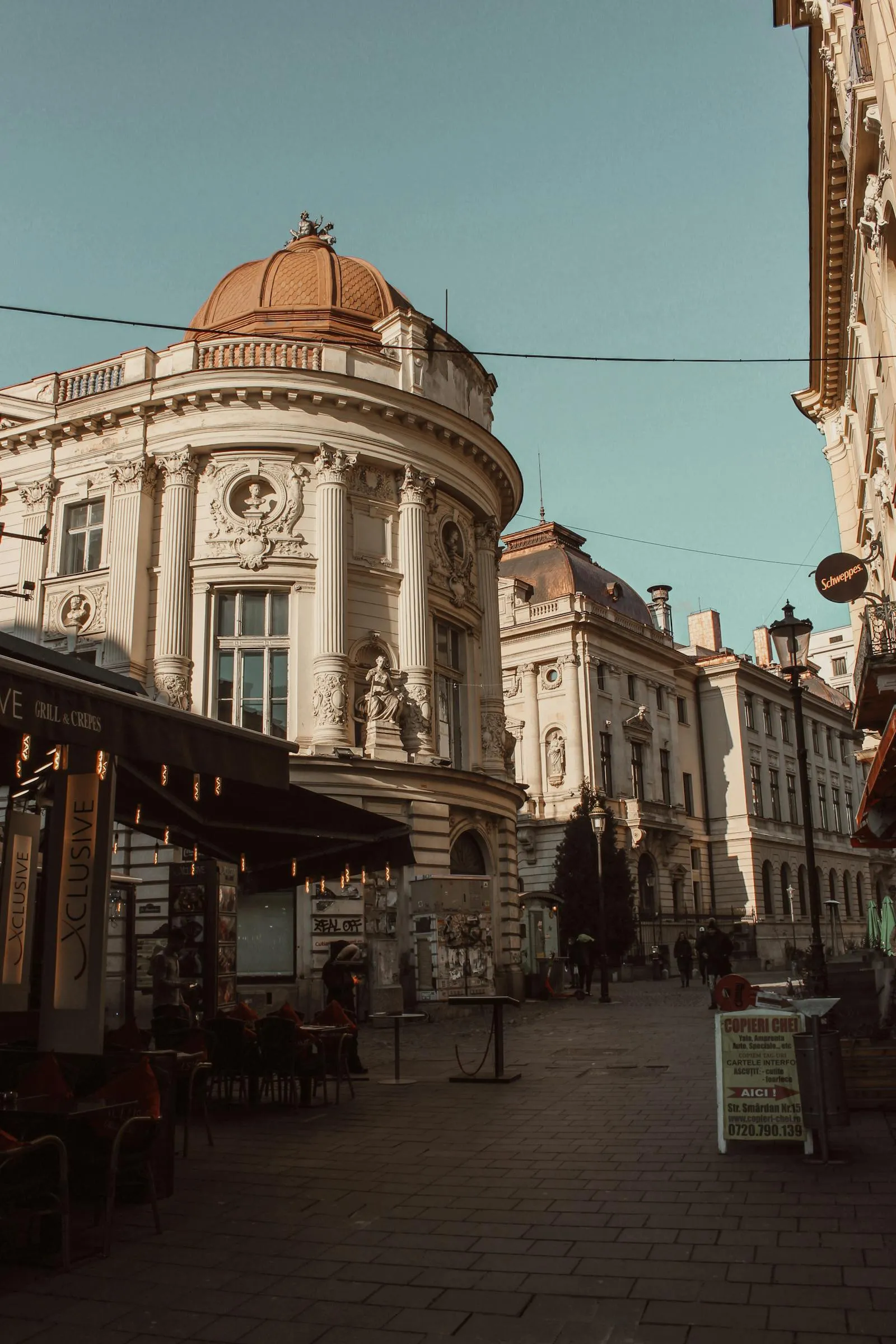
Built between 1897 and 1900, the CEC Palace was designed by French architect Paul Gottereau in a lavish blend of neoclassical and baroque styles. Before its construction, the site held the ruins of the Saint John the Great Monastery and an adjoining inn. The 16th-century church had deteriorated and was demolished in 1875.
The palace was conceived as headquarters for the House of Savings and Consignments (Casa de Economii si Consemnatiuni / CEC), one of Romania’s first financial institutions formed after the 1859 union of the principalities. The building features five domes — one at each corner and the magnificent central glass dome soaring 30 metres above the banking hall.
Remarkably, the palace survived intact through two major earthquakes (1940, 1977), Soviet bombing (1941), and Anglo-American bombing (1944). It remains an active bank today.
What to See
- The magnificent central glass dome rising 30 metres above the banking hall
- Five ornate domes — one at each corner plus the soaring central dome
- Monumental staircase and lavish corridors
- Elaborate ornamental interior details — every surface is decorated
- The facade on Calea Victoriei — especially beautiful in evening light
The building sits directly opposite the National Museum of Romanian History, creating one of Bucharest’s most impressive architectural vistas.
Tips for Visiting
This is an active bank. Enter during banking hours (Monday-Friday, approximately 9:00-17:00) and be respectful of banking operations. You can walk into the main hall, look up at the dome, and admire the interior.
Best photographed from outside: Cross Calea Victoriei to get the full facade in your frame. Evening light is particularly flattering.
Guided tours: Architecture walking tours of Calea Victoriei can provide deeper context about the building and its neighbors.
Combine with: The National History Museum (directly opposite), Cismigiu Gardens (5 minutes walk), and the Old Town (5 minutes walk).
Getting there: The CEC Palace sits on Calea Victoriei between Universitate metro (M2) and Izvor metro (M1, M3), roughly equidistant from both at 8-10 minutes walk. Also reachable by trolleybuses 61, 66, 69, 90, 85, 91 and buses 336, 601.
Is It Worth It?
You will walk past the CEC Palace on any visit to Calea Victoriei, and you should absolutely step inside. The 30-metre glass dome alone makes it worth the 15-minute detour. It is a rare case of a building that is even more impressive inside than its extraordinary exterior suggests.
A Glimpse into the Past
The CEC Palace on Calea Victoriei in the Belle Epoque -- designed by Paul Gottereau in French Beaux-Arts style, completed in 1900
Photo: Unknown author · Public domain · Wikimedia Commons
The intersection near the CEC Palace, circa 1900 -- the Grand Hotel de France and Socec typography visible alongside the newly built palace
Photo: Neoclassicism Enthusiast · CC BY-SA 4.0 · Wikimedia Commons
Calea Victoriei 13, Sector 3, Bucuresti
Open in Google Maps