Romania is a country with a strong and specific culture — shaped by Eastern Orthodox Christianity, over a century of Ottoman influence, four decades of communism, and a rapid transition to EU membership that overlaid new habits without fully replacing old ones. Tourists are given significant latitude; Romanians are genuinely warm and forgiving with visitors. But there are specific customs where ignorance is noticed and specific ones where knowing them will visibly improve your interactions.
Dress Codes for Churches and Monasteries
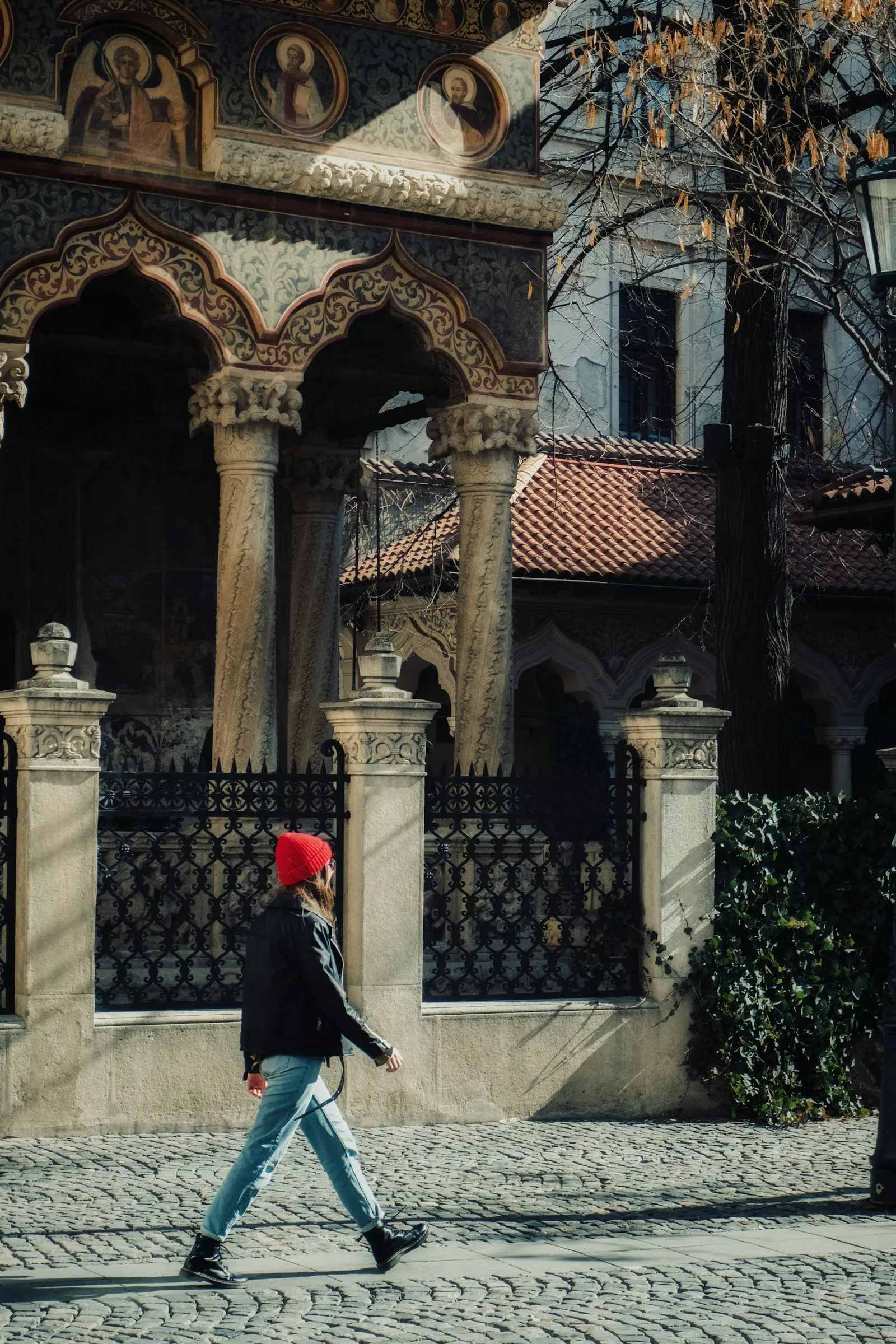
Bucharest has a remarkable density of Orthodox churches for a European capital — dozens of working churches within the central area, ranging from the ornate Stavropoleos Monastery to the simple neighborhood churches tucked between apartment blocks. The dress code is consistent across all of them.
The rule: Covered shoulders and covered knees for everyone. For women entering monasteries, a headscarf is expected. Most monasteries — including those in the Mitropoliei complex — keep a supply of scarves at the entrance for visitors to borrow. This is not a suggestion; it is enforced at entrances by staff.
The practical implication for a summer visit: carry a light layer in your bag if you plan to visit churches during a hot day. Many visitors do not, and then have the choice of borrowing an institutional-looking scarf or not entering at all. The Stavropoleos Monastery courtyard — one of the most photographed architectural spaces in Bucharest — is accessible in outdoor clothes, but the church interior requires the full dress code.
Photography inside churches during services is prohibited. Outside services, discreet photography of the architecture is generally tolerated. Flash is not.
Greetings — What Is Standard and What Is Not
The Romanian greeting system is context-dependent and worth understanding before you encounter it.
In professional contexts, business meetings, and introductions with strangers: a firm handshake is the default. This applies across genders. In social contexts with acquaintances and friends: one or two cheek kisses are common, starting on the left cheek. Among closer friends, hugging is warm and frequent.
For tourists: the most important rule is to follow, not lead. Do not initiate a cheek kiss with someone you have just met in a shop, hotel, or tour group — a handshake is always appropriate and will never offend. Romanians read social warmth accurately; they will initiate contact when they feel it is appropriate to the relationship.
One note on eye contact: Romanians make sustained eye contact during conversation in a way that can feel intense to visitors from cultures where gaze is more fleeting. This is not aggression or unusual interest — it is the normal attentiveness of Romanian conversation style. Match it, or at least do not look away too frequently.
Table Customs — Three That Matter
Wait until everyone is served. In Romanian dining culture, starting to eat before all guests have their food is a noticeable breach of table etiquette. This applies even at casual restaurants. The host or eldest person often signals the start — wait for that cue.
The toast is taken seriously. The Romanian toast is ‘noroc’ (good luck) or ‘sanatate’ (health). The custom is to make direct eye contact with each person you clink glasses with. Breaking eye contact during this moment is considered to bring bad luck. This is not metaphorical — Romanians say it will result in seven years of bad luck and most take it seriously enough to remark when a foreigner breaks it. At a table of many people, you do not need to reach across to clink with everyone; a general raising of the glass while making eye contact around the table is acceptable.
Bread comes first. In traditional Romanian restaurants and many mid-range ones, bread appears on the table without ordering. It is included in the price. Eating it before the food arrives is entirely normal.
Tipping in Bucharest
Tipping at 10% in restaurants is the standard and is expected as part of the dining social contract, not as an optional gesture. Servers do not add it to the bill — you calculate and include it when paying. The easiest method: when the server brings the card machine, tell them the total you want to pay (for example, if your bill is 87 RON, say “100” to include a 13 RON tip). Leaving nothing is noticed and commented on in the kitchen.
For taxis and rideshares, rounding up to the nearest 5 RON is the norm. For tour guides, the tipping guide covers the specific norms.
Five Things That Mark You as Respectful
-
Lowering your voice inside churches. Romanian churches are working religious spaces, not tourist attractions. Loud conversation, especially during or near a service, is strikingly inappropriate.
-
Saying hello when entering a small shop. In smaller shops — bakeries, butchers, local markets — greeting the staff (‘buna ziua’) when you enter is expected. Walking in and immediately picking up items without greeting anyone reads as dismissive.
-
Not photographing strangers without asking. Romania does not have a strong street photography culture, and photographing people in markets, restaurants, or on the street without asking is considered intrusive. For portraits, ‘pot sa va fotografiez?’ (may I photograph you?) is the right approach.
-
Being patient with bureaucratic slowness. If you need anything from a government office, pharmacy, or bank branch, expect processes to take longer than you expect. Expressing frustration openly is counterproductive and reflects poorly.
-
Accepting food offered in someone’s home. If you are ever invited to a Romanian home — which is a genuine gesture of warmth — refusing offered food or drink is difficult to do gracefully. ‘A little’ is the right response to a second helping if you genuinely cannot eat more.
Frequently Asked Questions
What is the dress code for churches in Romania?
Orthodox churches and monasteries in Romania require covered shoulders and knees for both men and women. For women, a headscarf is expected at monasteries — most have a small supply of scarves at the entrance that visitors can borrow. Shorts and sleeveless tops are not acceptable inside. The rule applies during services and outside them. At Stavropoleos Monastery and the Mitropoliei complex in Bucharest, this is enforced by staff at the entrance.
How do Romanians greet each other, and what should tourists do?
In professional and first-meeting contexts, a handshake is standard for all genders. Among friends and acquaintances, one cheek kiss (left cheek first) is common; two cheek kisses happen in closer social circles. The important thing for tourists: wait for the other person to initiate. Do not lean in for a cheek kiss with someone you have just met in a professional or semi-formal context — a handshake is always safe. Romanians are not cold; they are appropriately formal with strangers and warm with people they know.
Are there specific table manners Romanians observe?
A few that matter in practice: wait until everyone at the table has been served before starting to eat — starting before others is considered impolite. During a toast (Romanian: 'sanatate' or 'noroc'), make direct eye contact with each person you clink glasses with — breaking eye contact is considered to bring bad luck, and Romanians take this seriously enough that it will be noted. Do not place your hands in your lap during the meal; keeping them on or near the table is the norm. For a full meal, expect bread to appear without ordering it — it is included as a matter of course in most traditional restaurants.
Is photography allowed at religious sites in Bucharest?
Generally yes in the courtyards and exteriors of Orthodox churches and monasteries. Inside the churches, photography is restricted during services and sometimes prohibited entirely. At Stavropoleos Monastery, discreet photography of the architecture is generally tolerated outside service hours; flash photography and loud behaviour are not. At the Village Museum, photography is freely allowed. The Palace of Parliament allows photography in most rooms but the guide will indicate which areas are restricted on the day.
What basic Romanian phrases are worth knowing?
Five that will be immediately appreciated: 'buna ziua' (good day — formal daytime greeting), 'multumesc' (thank you — pronounced 'mool-tsoo-mesk'), 'va rog' (please), 'scuzati' (excuse me / sorry), and 'vorbiti engleza?' (do you speak English?). Romanians are genuinely pleased when visitors make an effort with Romanian, even imperfect attempts. The language sounds intimidating at first but the letters are mostly pronounced as written.