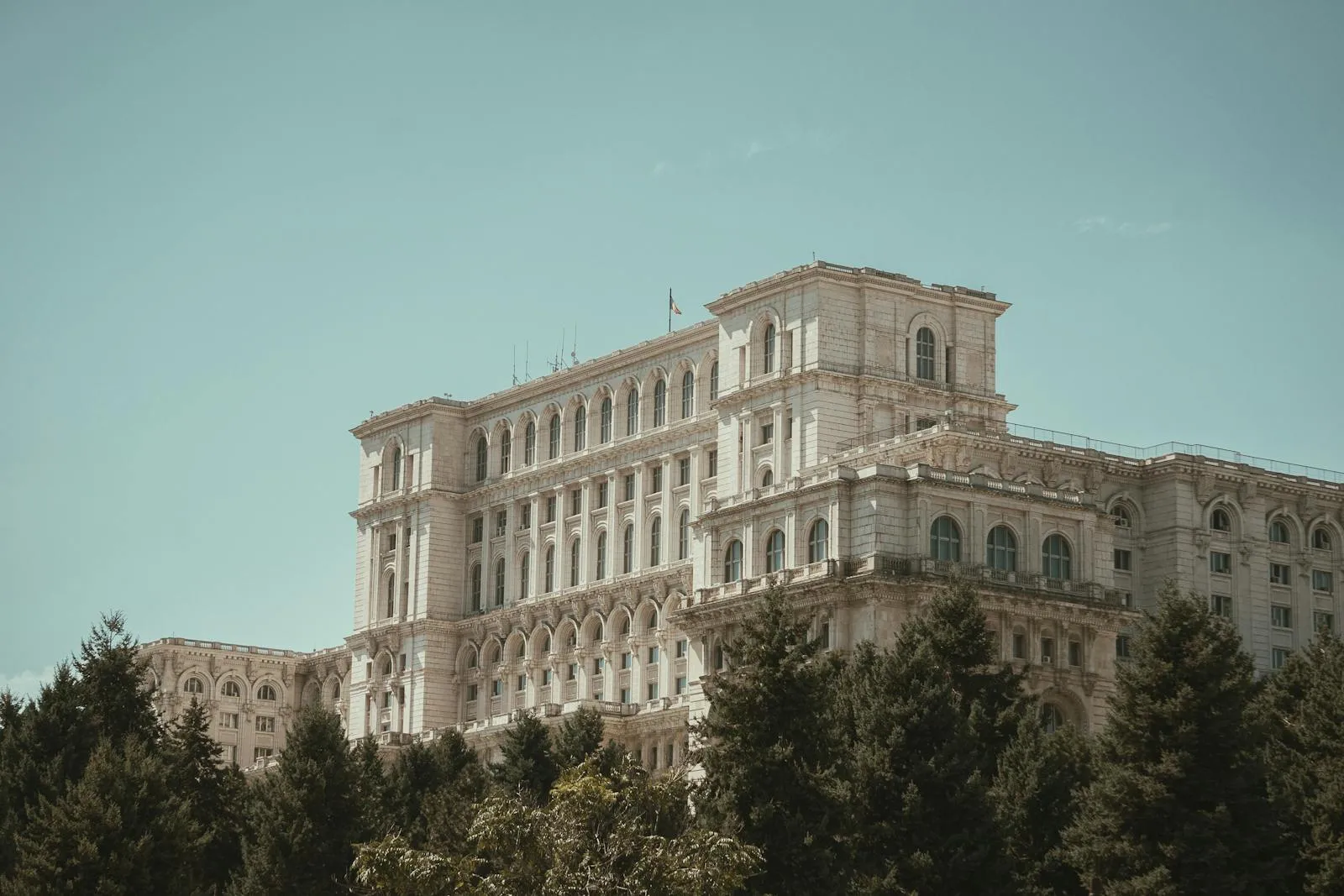
Bucharest’s tour guide ecosystem has a specific economic reality that most visitors do not see until they are standing at the end of a three-hour walk through the Old Town, watching the guide thank people as they drift away. Understanding how guides here earn a living changes how you think about the tip — and how much to leave.
The Free-Tour Economy
The “free walking tour” model arrived in Bucharest around 2010 and has since become the dominant format for first-time visitors. The mechanics are simple: you book online or show up at a meeting point, join a group of 10–25 people, and spend two to three hours walking through the city with a guide who covers the history, the communist legacy, the architecture, and the local life. At the end, you tip whatever you think it was worth.
What the model does not advertise is that the guide receives nothing from the organiser beyond the use of the brand and the booking system. Some operators charge the guide a small platform fee per tour. This is not unique to Bucharest — it is standard across Central and Eastern Europe — but the math matters here because Romanian wages are lower than Western Europe and the cost of living in Bucharest has risen sharply since 2020.
The range that reflects that reality: 30–50 RON per person. At 30 RON you are leaving a fair acknowledgement. At 50 RON you are telling the guide they did an exceptional job. If you genuinely did not enjoy the tour, 20 RON is a minimum — walking away with nothing is unusual enough to sting in a profession where every group matters.
Private and Booked Guides — A Different Calculation
A private licensed guide in Bucharest typically charges 200–400 RON for a half-day (around €40–80), depending on experience and the type of tour. This is a pre-agreed fee, not a tip-based income. The guide has confirmed their rate and accepted the booking. In this context, tipping is a genuine extra — not the scaffolding their income depends on.
50–100 RON on a half-day tour is appropriate for good service. For a full-day private tour that involved research, flexibility around your interests, and real local knowledge that you could not have found in a guidebook, 100–150 RON is fair. The question to ask yourself: did this guide add something that a self-guided walk could not have?
One practical note: book licensed guides through official channels (the National Tourism Authority maintains a register of certified guides) or well-reviewed platforms. The certification matters — licensed guides pass examinations on Romanian history, art, and cultural heritage and carry professional liability. It also helps with tip timing: an official booking usually ends with a clear farewell moment, not the ambiguous drift of a large group tour.
When the Guide Is Part of a Larger Operation
Day tours to Peles Castle, organised city bus tours, and themed walks sold through hotel concierges sit in the middle of the spectrum. The guide is employed and paid by the company. Tipping is not expected but is a recognised way to signal that a guide was notably good — thorough, personalised, historically credible rather than recited.
20–30 RON per person is the range that does the job. If you are travelling as a couple or a family, one person handling the group’s contribution at the end keeps the farewell clean.
The Mechanics of Handing It Over
Prepare your tip before the tour ends. 30 RON is either a single note or a round combination — not change scraped from a jacket pocket while the guide is mid-sentence. On free tours, guides often station themselves at the finishing point and make a brief exit speech about their other tours and reviews; that is the moment. On private tours, the natural handover is at the end of the walk when you are saying goodbye.
A brief word — “the Palace of Parliament story was something I did not know, thanks” — matters as much as the amount to most guides. They hear a lot of generic “great tour” and the specific acknowledgement lands differently. It is also, practically, how they refine what to include in future tours.
For groups: one person collecting everyone’s contributions and handing it as a bundle avoids the spectacle of a queue of people pressing notes into the guide’s hands. The guide will appreciate the efficiency.
What Not to Do
Do not tip in euros unless you have genuinely run out of RON and explain the situation. Do not tip via card — most guide interactions are cash-only and even if a card option exists, platform fees eat into it. Do not wait until you are halfway to the Bolt app to turn back and tip — the guide has moved on and the moment has passed. And do not ask the guide what the right amount is: they will be gracious and deflect, and the conversation will be uncomfortable for both of you.
The amounts above are specific to Bucharest and current as of 2026. For complete context on money and tipping across all situations in the city, the money and tipping guide covers restaurants, taxis, hotels, and service workers in detail.
Frequently Asked Questions
Should I tip on a free walking tour in Bucharest?
Yes — and it matters more here than almost anywhere else. 'Free tour' is a commercial model, not charity: the guide earns nothing from the organiser and survives entirely on tips. A guide who runs two tours a day and gets 20 people tipping 30 RON each earns 1,200 RON — a reasonable day's wage in Bucharest. If you enjoyed the tour, 30–50 RON per person (€6–10) is the right range. Tipping 10 RON or nothing is noticed and remembered in a city where guides talk to each other.
Do I tip if I booked a private guide through a company?
Yes, but the dynamic is different. You have already paid a fee — the tip is purely a gesture of appreciation, not the guide's main income source. 50–100 RON (€10–20) for a half-day tour is generous but not excessive. For a full-day private tour with exceptional local knowledge and flexibility, 100–150 RON is appropriate. Hand it directly to the guide, not via the booking platform or company — it will reach them without being split.
What about group tours with a pre-set price?
Group tours (8–20 people, fixed price per person) sit between free tours and private guides. The guide earns a wage from the company, so tipping is genuinely optional — but appreciated. 20–30 RON per person is a fair acknowledgement of a good guide. If the group was large and the guide handled it well, err toward 30 RON. If the tour felt rushed or impersonal, skipping the tip is not rude.
Is it better to tip in RON or euros?
Always RON. Guides are based in Bucharest, spend in lei, and lose money converting euros at a bad rate (or simply can't use them at a local coffee shop). Withdraw RON from a bank ATM before the tour — Banca Transilvania and BRD ATMs are on every central street. Having exact change (e.g., two 20 RON notes) lets you tip cleanly without waiting for the guide to break a 100.
When and how do I hand over the tip?
At the end of the tour, as the group disperses. On free tours, the guide will usually stand at the finish point and thank people individually — that is your moment. Hand the cash directly, say a brief word if you enjoyed a particular story, and keep it natural. Do not make it ceremonial or hold up the dispersal. If you have a group, one person can collect everyone's share and hand it over together — the guide will appreciate not having to manage 15 separate handovers.
Do tour guides in Bucharest expect tips from all nationalities equally?
Experienced Bucharest guides report that Northern European, North American, and Australian visitors tip more reliably than some others — and that within those groups, awareness of the free-tour model varies. The short answer: do not assume your nationality sets expectations. If you enjoyed the tour, tip. If you did not, you are not obligated. The norms above apply regardless of where you are from.