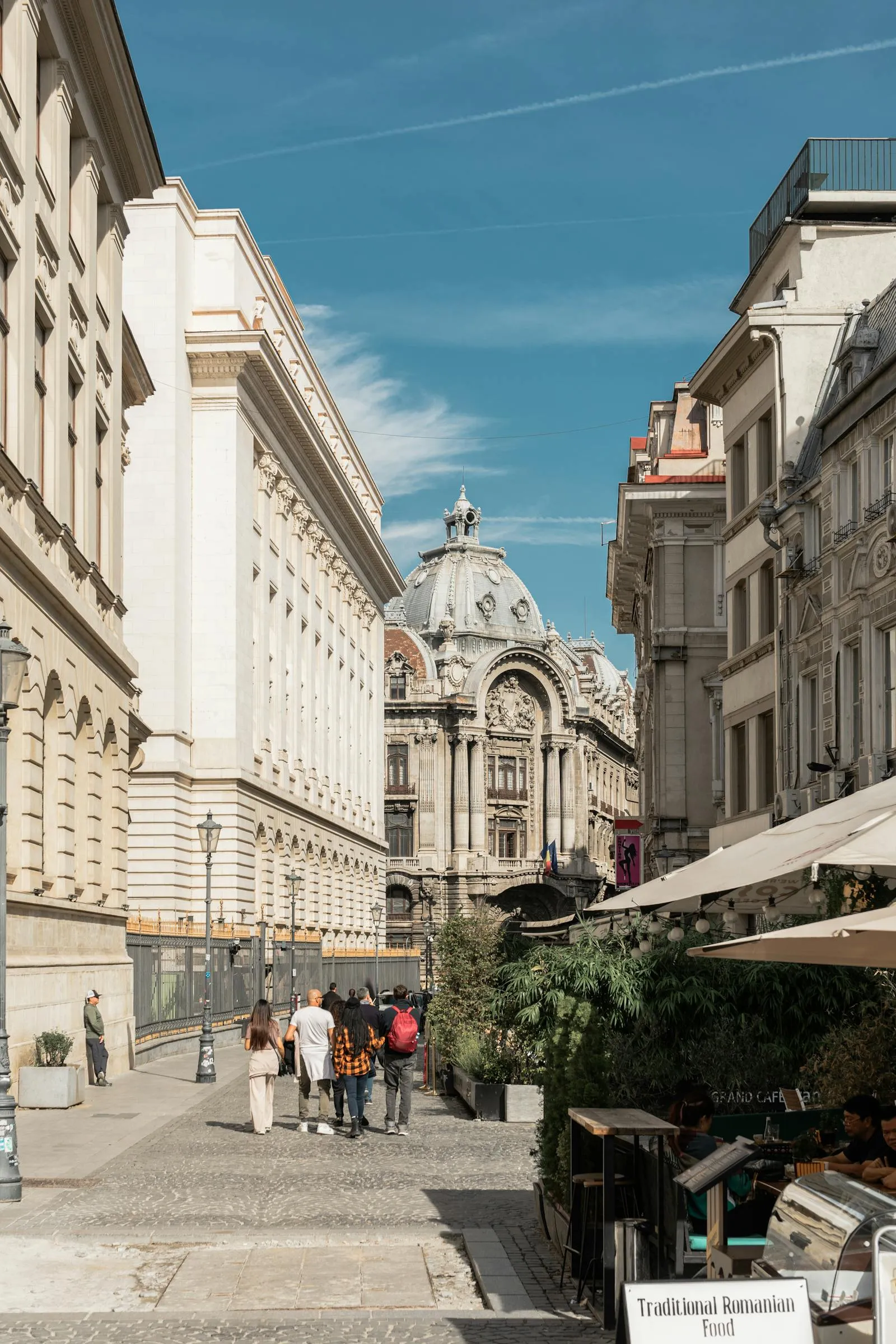
Bucharest does not appear on most digital nomad shortlists. That is a mistake, and one that works in your favor if you show up — the city has fast internet, very low costs, a legitimate cafe culture, and a growing coworking infrastructure, without the crowds that have overtaken Lisbon, Tbilisi, or Chiang Mai.
This guide covers what you actually need to know before you arrive, not the version that treats every city the same.
Why Bucharest for Digital Nomads
The case in four points:
1. Internet speed. Romania consistently ranks among the top five countries in the world for fixed broadband speed, and Bucharest’s infrastructure reflects this. Hotel, apartment, coworking, and cafe connections in the city are fast by any global standard. You will not be fighting for bandwidth.
2. Cost. A comfortable digital nomad lifestyle in Bucharest — good apartment, eating out most meals, coworking membership, occasional entertainment — runs €800–1,400/month. This is significantly cheaper than Prague, Warsaw, or Berlin at similar quality levels. Accommodation is the biggest variable.
3. Location. Bucharest’s airport (Henri Coandă) has direct connections to most European hubs. A weekend in Istanbul, Athens, Kyiv, or Vienna is a short and cheap flight. As a base for European exploration, the city’s position in Southeast Europe is underrated.
4. The city is actually good. This sounds obvious but isn’t. Bucharest has a food scene, nightlife, cultural life, and social infrastructure that makes staying here for 2–3 months genuinely enjoyable rather than just affordable. The cities that are cheap but boring drain people over time.
The Honest Downsides
Before the practical details, the things that regularly frustrate nomads who come expecting a polished experience:
Pavements are uneven and infrastructure is visually chaotic. This stops bothering you quickly, but the first week can be disorienting.
Romanian bureaucracy is slow. If you need anything done officially — SIM card beyond basic, banking, any government process — add time and patience to your estimates.
Air quality in winter. Bucharest has a heating infrastructure that still relies partly on older systems. Winter air quality, particularly during temperature inversions, is noticeably worse than spring or autumn.
Language barrier in services. In central cafes, restaurants, and coworking spaces, English is the norm. In supermarkets, pharmacies, and with older service workers, Romanian is assumed. A few basic phrases go a long way.
Visa Situation
EU / EEA / Swiss citizens: No visa required. You can stay indefinitely. After 90 days you should register with local authorities, but enforcement is inconsistent and the process is simple.
US, UK, Australian, Canadian citizens: Romania allows 90-day visa-free stays within a 180-day period under the Schengen framework (Romania joined Schengen land borders in 2024, air/sea from 2023). For longer stays, you need a long-stay visa (Type D) or a residence permit. The D visa requires proof of income, health insurance, and accommodation — it is achievable but requires planning. Processing takes 4–8 weeks at the Romanian consulate in your home country.
Other nationalities: Check the Romanian Ministry of Foreign Affairs for current requirements. Rules vary significantly by nationality. Romania is not yet a full Schengen member for all purposes, so Schengen visa rules apply differently depending on your nationality and entry point.
Practical note: Many nomads do 90-day stays, leave briefly to a non-Schengen country (Ukraine, Moldova, Turkey), and re-enter. This works legally but is worth verifying for your specific nationality before relying on it.
Cost of Living Breakdown
Real numbers for a single person, 2026:
| Category | Budget option | Comfortable option |
|---|---|---|
| Accommodation (1BR) | €350–500/mo | €600–900/mo |
| Food (eating out frequently) | €150–250/mo | €300–500/mo |
| Coworking membership | €80–150/mo | €120–200/mo |
| Transport (Bolt/metro) | €40–70/mo | €80–150/mo |
| Utilities + SIM | €50–80/mo | €80–120/mo |
| Total | €670–1,050/mo | €1,180–1,870/mo |
Accommodation in Floreasca or Dorobanți costs more. Titan, Dristor, or Militari cut your rent by 30–40% for comparable space. Most nomads optimise by living slightly outside the premium zones and taking a 15-minute metro to the centre.
Best Coworking Spaces
Bucharest’s coworking scene has grown significantly in the last five years. The main options:
Impact Hub Bucharest — one of the better-known spaces, centrally located, good community events, reliable internet. Day passes and monthly memberships available. Popular with startups and freelancers.
Spaces Victoriei — premium coworking at the north end of Calea Victoriei. Good for client meetings and focused work. More corporate in atmosphere than Impact Hub.
Mindspace — upscale coworking with multiple locations, amenities, and a professional setup. Better for longer stays where access to meeting rooms and proper facilities matters.
TechHub Bucharest — tech-focused community space, good if you are in software development or want to connect with the local tech scene.
WeWork — present in Bucharest, reliable by WeWork standards, predictably priced for those who already know the format.
Day passes across these spaces run 80–150 RON (€16–30). Monthly memberships start around 400 RON (€80) for hot desks and go up to 1,200+ RON (€240+) for dedicated desks in premium spaces.
Best Cafes to Work From
Not all cafes are nomad-friendly. These ones are, with reliable WiFi, power outlets, and tolerance for laptops:
Specialty coffee with laptop culture:
- Artisan (multiple locations) — strong coffee, reliable WiFi, no pressure on long stays during off-peak hours
- Bob Coffee Lab — Floreasca area, excellent coffee, quiet during weekday mornings
- Origo — one of the best specialty roasters in the city, Centrul Vechi area
- Beans & Dots — multiple locations, known for being laptop-friendly
Larger spaces with more working capacity:
- Gradina Botanica cafe (seasonal, spring–autumn) — working outdoors in the Botanical Garden is a genuine Bucharest privilege
- Shift Pub — Centrul Vechi, large space, decent WiFi, tolerates working during the day
What to avoid: Weekends in central cafes are crowded and noisy. If you need focused work time, weekday mornings before 11am are the sweet spot at any location. Avoid Saturday afternoons everywhere.
Full cafe guide with addresses and ratings →
Internet and SIM Cards
Mobile data: Get a local SIM on arrival. All three major operators (Orange, Vodafone, Digi) sell prepaid SIMs without documentation for the basic tier. Digi (RCS-RDS) offers the best value — unlimited data plans start around 30–40 RON/month (€6–8). Coverage is excellent throughout the city.
Home internet: If you are staying a month or more, a fixed internet connection from Digi makes sense. Speeds of 500Mbps–1Gbps are standard. Monthly cost is 25–40 RON (€5–8). Installation requires a fixed address and some patience with the scheduling process.
Public WiFi: Available in most cafes, coworking spaces, and metro stations. Quality varies. Metro WiFi is surprisingly usable for basic tasks.
Best Neighborhoods for Nomads
Floreasca — Dorobanți: The most convenient, most expensive. Good cafes, restaurants within walking distance, English widely spoken. Where most nomads end up on their first visit.
Centrul Vechi — Izvor: Best access to the city’s social life and the highest cafe density. Noisy at night — good if you work mornings, bad if you need evening quiet.
Cotroceni: Beautiful, quieter, slightly inconvenient for the coworking hubs. Good for heads-down work months.
Titan — Sector 3: Cheapest with good metro access. Less curated but functional. Recommended for budget-conscious stays of 2+ months.
Finding Accommodation
For stays of 1–4 weeks: Airbnb works well in Bucharest. Prices are reasonable, hosts are generally responsive, and the city has enough listings that you can be selective about location and quality.
For 1–3 months: Facebook groups (“Expats in Bucharest,” “Apartments for Rent Bucharest”) and local platforms like Storia.ro and Imobiliare.ro have better value than Airbnb for monthly stays. Landlords typically want first and last month upfront plus a deposit. Having someone local to translate the lease terms is useful.
Budget benchmark: A well-located furnished 1-bedroom apartment for a monthly stay runs €400–700 depending on area and quality. Comparable to Tbilisi, cheaper than Lisbon or Warsaw.
The Local Tech and Startup Scene
If you are in tech, Bucharest has a genuine scene worth connecting with. Romania produces a disproportionate number of software engineers relative to its size, and Bucharest is where most of the country’s tech infrastructure concentrates.
Events worth finding: Techsylvania (Cluj, but attracts Bucharest crowd), How to Web conference, and the regular meetups organized by local developer communities (check Meetup.com for Python, React, DevOps groups). Impact Hub runs regular startup and founder events.
The freelance and remote work culture is well-established here — you will not be explaining what you do to every person you meet, which makes the social side of nomad life easier.
Practical Notes
Health insurance: Get it before you arrive. Public healthcare in Romania is available to registered residents but the process for foreigners is slow. Private clinics (Regina Maria, Medlife) are good and affordable — a GP consultation is €30–60 — but you want coverage for anything larger.
Cash vs card: Cards are accepted almost everywhere in central Bucharest. Markets, older establishments, and informal vendors still prefer cash. Keep some RON available. ATMs are plentiful; use bank ATMs rather than standalone machines to avoid high fees.
Power: Standard European plugs (Type F). No adapter needed if you are coming from Europe. Non-European devices need a Type C/F adapter.
Time zone: EET (UTC+3 in summer, UTC+2 in winter). Good overlap with Western Europe for synchronous work; challenging for US West Coast clients.
Frequently Asked Questions
Is Bucharest good for digital nomads?
Yes. Romania has some of the fastest internet in the world, Bucharest has growing coworking spaces, and the cost of living is very low for European standards. A comfortable nomad budget is 800-1,400 EUR/month.What is the internet speed like in Bucharest?
Excellent. Romania consistently ranks top 5 globally for fixed broadband. Most apartments, cafes, and coworking spaces offer reliable high-speed connections well above 100 Mbps.Do I need a visa to work remotely from Bucharest?
EU citizens can stay and work freely. Non-EU citizens can stay 90 days visa-free, and Romania introduced a digital nomad visa in 2022 for longer stays with proof of remote income.What are the best coworking spaces in Bucharest?
Impact Hub, TechHub, and Commons are well-established. Many cafes like Origo and The Urbanist also work well as informal workspaces with fast WiFi and good coffee.Which neighborhood is best for digital nomads?
Floreasca and the Victoriei area offer the best mix of cafes, coworking spaces, and restaurants. Cotroceni is quieter and more affordable. All have excellent internet.