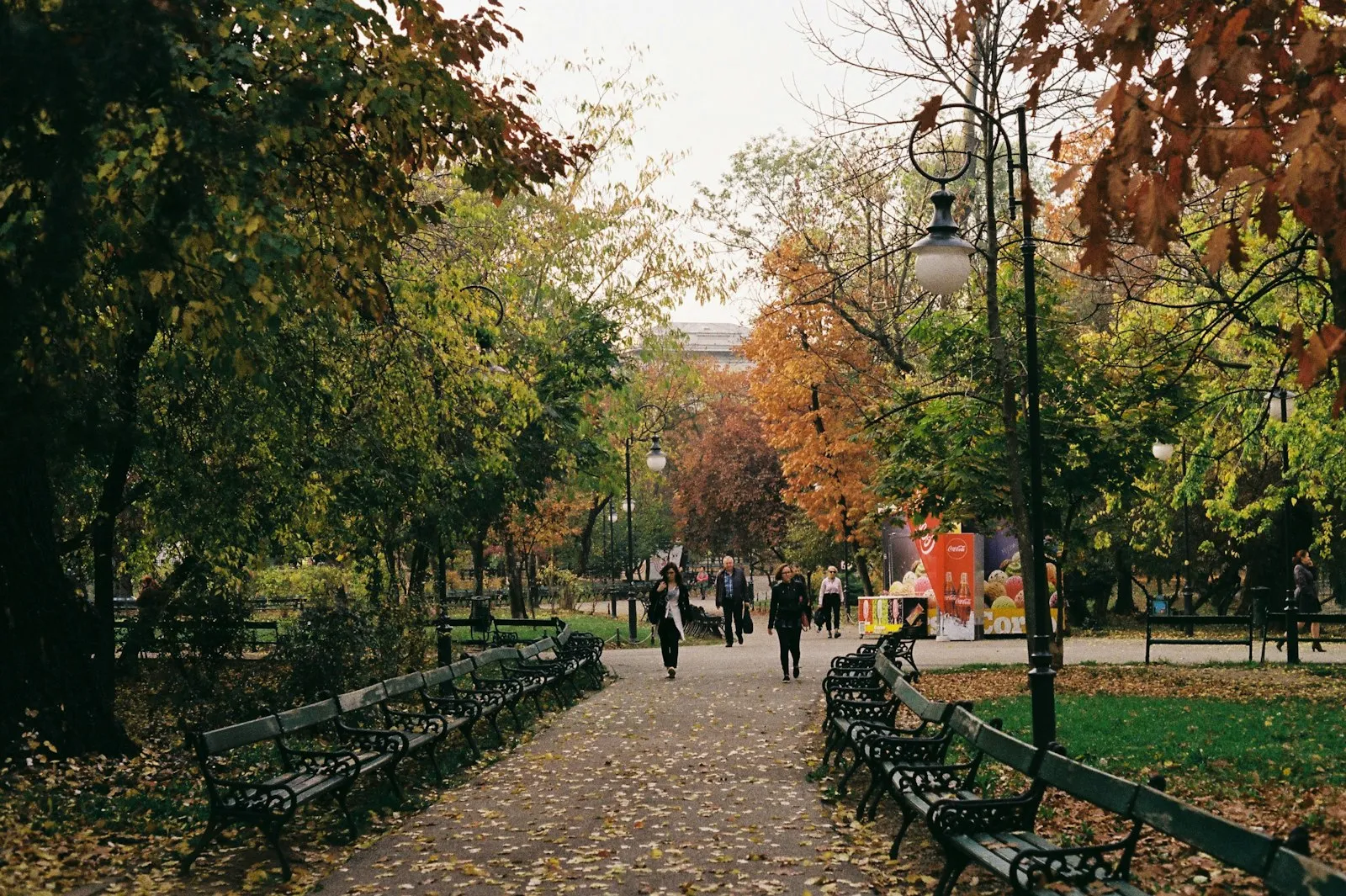
The Bucharest vs Budapest question appears constantly in travel forums, and the honest answer is more nuanced than the rankings suggest. Both cities are underrated relative to Western European capitals, both are excellent for food and nightlife, and both are cheap by EU standards. But they are different in character in ways that make one or the other the right choice depending on what you are actually looking for.
Cost — Bucharest Is Notably Cheaper
The price gap is real and consistent. Based on the costs in the money and tipping guide and general 2026 market rates:
| Category | Bucharest | Budapest |
|---|---|---|
| Budget hotel/hostel | €10–60/night | €20–90/night |
| Mid-range hotel | €60–120/night | €80–150/night |
| Meal at mid-range restaurant | €12–24 | €15–30 |
| Coffee (specialty) | €1.60–3 | €2.50–4.50 |
| Beer at a bar | €2.40–4 | €4–7 |
| Metro single trip | €0.60 | €1.40 |
Over a five-day trip at mid-range spending, most visitors report spending 30–40% less in Bucharest than Budapest for a comparable experience. This gap is meaningful for budget travelers and noticeable even for those who are not counting carefully.
Architecture — Two Completely Different Visual Experiences
Budapest is a more beautiful city in the conventional, photogenic sense. The neo-Gothic Parliament building lit at night over the Danube is one of the most photographed urban scenes in Europe. The Chain Bridge, Buda Castle on the hill, and the Art Nouveau grandeur of the Great Market Hall deliver exactly what tourism photography promises.
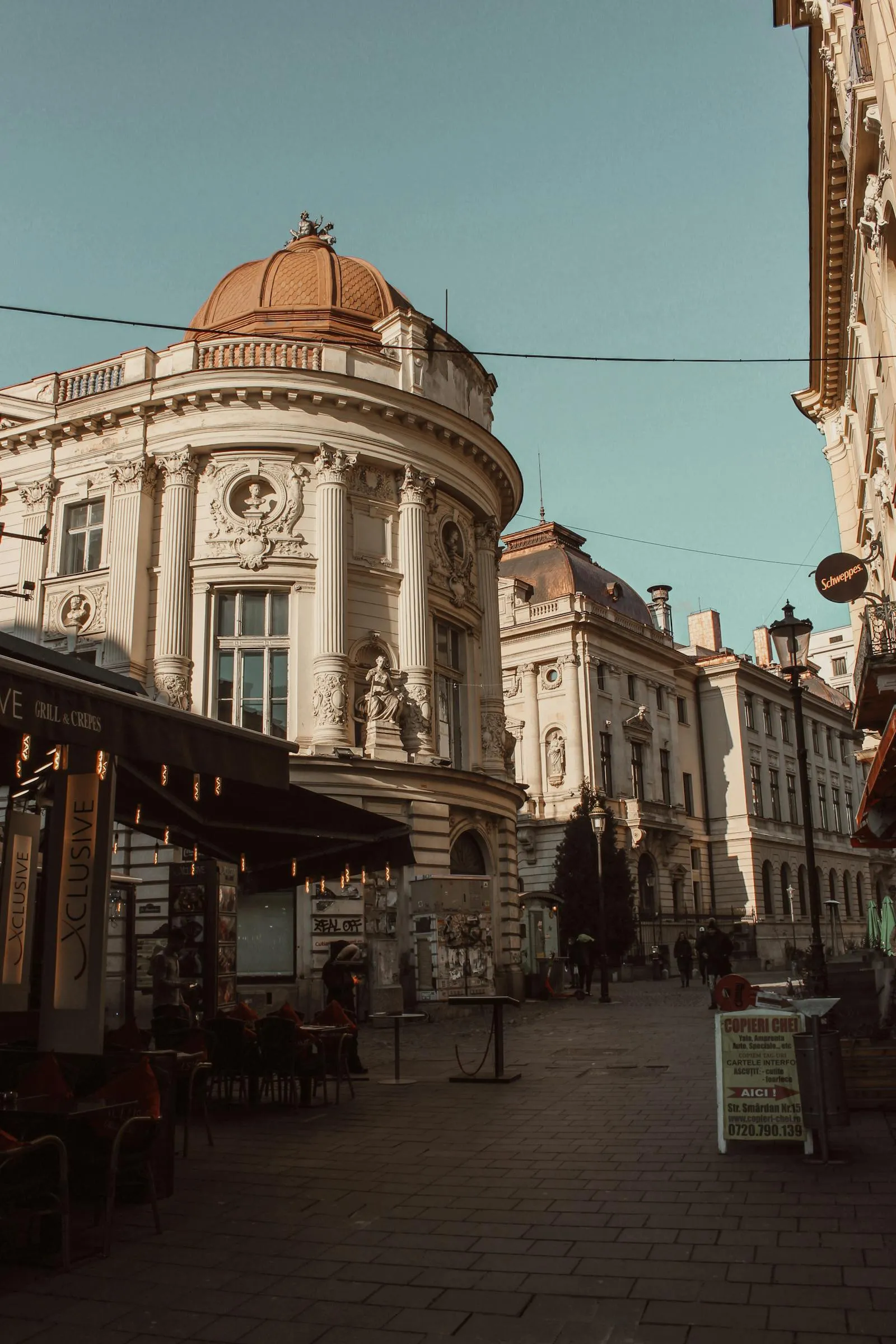
Bucharest does not have this visual coherence. What it has instead is architectural archaeology: Belle Epoque palaces from the 1890s that survived both World Wars stand next to communist-era apartment blocks from the 1960s that replaced their demolished neighbors, next to glass office towers from the 2000s. On arrival, this looks like chaos. On day two, it starts to read as history. By day three, it is the most interesting built environment you have been in for years.
The exception that Bucharest holds over Budapest: the Palace of Parliament. The second-largest building in the world by floor area (the Pentagon is first by footprint, the Parliament by volume), it was built by Ceausescu from 1984 and completed after his execution in 1989. The exterior is imposing on a scale that photographs cannot capture. The interior — on a mandatory guided tour — is extraordinary: marble staircases, crystal chandeliers, carpet factories that operated exclusively for this building. Budapest has nothing that approaches this as a single historical artifact.
Food — Both Cities Are Excellent, Different in Character
Hungarian cuisine has a stronger global reputation and is well-earned — goulash, lángos, paprikás, the Jewish deli heritage of the Jewish quarter. Budapest has a more developed international restaurant scene with Michelin-starred restaurants at the top.
Romanian cuisine is less famous globally but equally worth your time: sarmale (cabbage rolls with pork and rice), ciorba (sour soups), mici (grilled minced meat rolls), papanași (fried doughnuts with sour cream and jam). Bucharest’s restaurant scene has improved dramatically since 2015 and the mid-range offer is excellent. The price advantage is significant — the meal that costs €30 per person in Budapest costs €15 in Bucharest.
Both cities have excellent cafe culture. Bucharest’s specialty coffee scene has grown rapidly and is now competitive with Warsaw or Prague. Budapest’s coffee tradition is longer and its historic coffee houses (the New York Café, for example) are architectural destinations in their own right.
Nightlife — Bucharest Is Underrated, Budapest Is Famous but Crowded
Budapest’s ruin bar scene — bars built in abandoned factories and courtyards in the Jewish district — is genuinely one of Europe’s most interesting nightlife inventions. Szimpla Kert is iconic for good reason. The problem: it has become so popular that the Jewish quarter on a Friday night now resembles a British stag party destination as much as a local cultural scene. The local population has been gradually priced and crowded out.
Bucharest’s nightlife has no equivalent international profile and is significantly better for it. The bars in and around Centrul Vechi are busy and international but not dominated by tourism. The electronic music scene, centered on venues in former industrial spaces in the city’s outer neighborhoods, regularly attracts internationally significant artists and draws a local crowd that still shows up for the music rather than the Instagram opportunity. If you care about nightlife quality and prefer it without the tourists, Bucharest is the clear choice.
The Verdict — Who Should Go Where
Go to Budapest if: You want a polished, beautiful European city that delivers on first impressions, you have limited time and want easy navigation, you value visual coherence in architecture, and you want the ruin bar experience even if it is now touristy.
Go to Bucharest if: You want more value for money, you are interested in communist history and its physical legacy, you want a city that still feels like it belongs to its residents rather than its visitors, and you want nightlife and restaurants where locals are still the primary audience.
Go to both if: You have 8–10 days in the region. The two cities are different enough that neither feels repetitive after the other. Direct flights between Bucharest and Budapest run frequently on low-cost carriers and are often inexpensive. Doing 3–4 nights in each is one of the best uses of 8 days in Central and Eastern Europe.
Frequently Asked Questions
Is Bucharest cheaper than Budapest?
Yes, significantly. A mid-range meal in Bucharest costs 60–100 RON (€12–20). The equivalent in Budapest runs 3,500–6,000 HUF (€10–17 at current rates) — comparable on paper, but Bucharest's quality-to-price ratio in the mid-range is better, and the bottom of the budget range is much lower. A hostel bed in Bucharest costs €10–20/night; in Budapest €20–35. Beer at a bar: 12–20 RON (€2.40–4) in Bucharest vs. €4–7 in Budapest. Over a 5-day trip, most visitors spend 30–40% less in Bucharest for a comparable standard of travel.
Which city has better architecture — Bucharest or Budapest?
Budapest is more photogenic overall. The Parliament building, the Chain Bridge, Buda Castle, and the Andrassy Avenue are a coherent visual set that delivers on every tourism photograph promise. Bucharest's architecture is more chaotic and layered — Belle Epoque palaces next to communist blocks next to glass towers — which is more interesting architecturally once you understand the history, but less immediately impressive on arrival. The exception: Bucharest's Palace of Parliament is the largest civil administrative building in the world by volume, and its interior is extraordinary in person in a way Budapest's famous sights are not.
Which city has better nightlife — Bucharest or Budapest?
Both are genuinely excellent European nightlife cities. Budapest's ruin bar scene is internationally famous and delivers. Bucharest's nightlife is equally good and significantly less known internationally — which means lower prices, smaller crowds, and less of the stag-party tourism that has visibly degraded parts of Budapest's Old Town nightlife. Bucharest's electronic music scene in particular is world-class and hosts genuinely important artists. If you care about nightlife and want a city where the locals are still present, Bucharest is the better choice.
Which city is easier for first-time visitors?
Budapest. The tourist infrastructure is more polished: better-signed attractions, more English everywhere including on transport, more consistent hotel quality at each price tier, and a historic centre that is geographically simpler (it is literally on a river, with two sides — Buda and Pest — clearly separated). Bucharest is walkable in the centre but harder to navigate as a whole, with a more sprawling layout, less consistent English on signage, and a public transport system that requires a little more learning. Neither city is difficult; Budapest is just more immediately legible.
Can I visit both Bucharest and Budapest in one trip?
Yes, and many people do. There are direct flights between the two cities (approximately 2 hours, often cheap on low-cost carriers). A common itinerary is 3–4 nights in each, covering about 8 days total. The two cities are different enough that one does not feel repetitive after the other — Bucharest and Budapest come from different historical and cultural trajectories that are visible in everything from the architecture to the food to the social atmosphere. If you have 8–10 days in Central and Eastern Europe, doing both is the best way to use that time.