Prices verified: March 2026
Have more questions about National History Museum of Romania (MNIR)? Ask Bucur.History
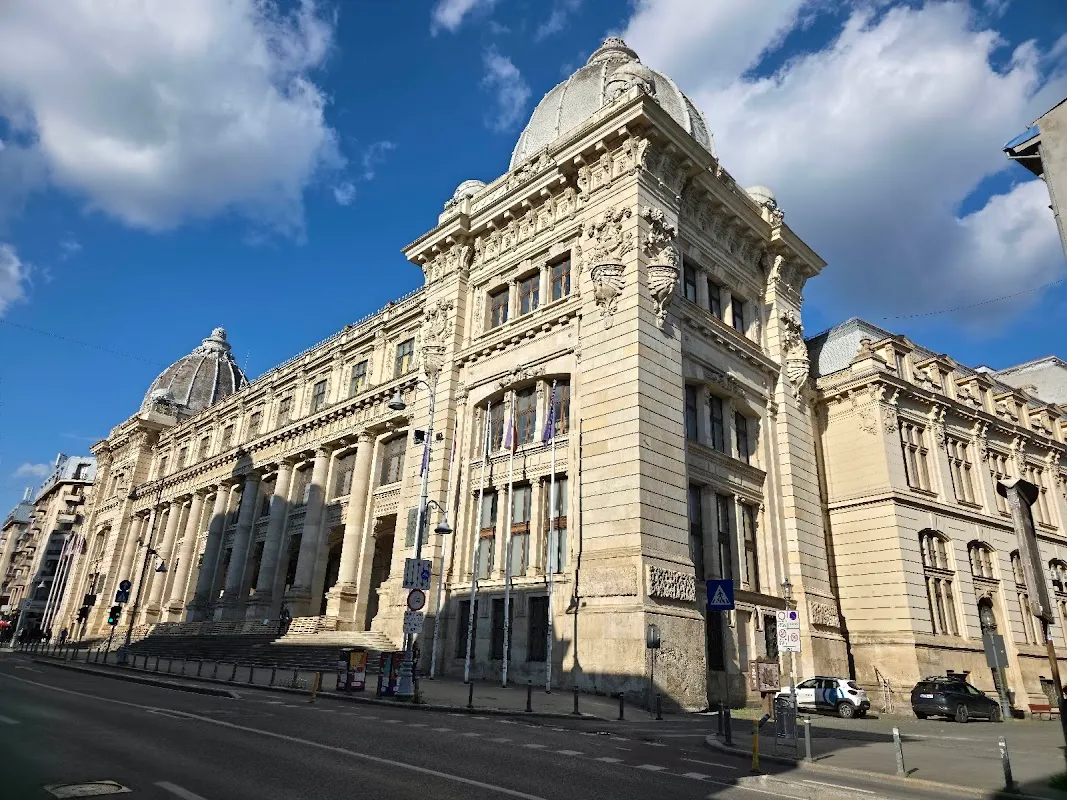
The National History Museum of Romania (Muzeul National de Istorie a Romaniei, or MNIR) is housed in the Postal Palace — a grand 19th-century building completed in 1899 to designs by architect Alexandru Savulescu, modelled on the Federal Post Palace in Geneva. The building dominates the southern stretch of Calea Victoriei and is itself part of any Old Town walking tour, even before you go inside.
Founded as a museum in 1972, MNIR brings together the national archaeological and historical collections under one roof. The institution covers Romanian history from the Paleolithic through the 20th century, with particular strength in pre-Roman Dacian civilisation, the Roman period, and medieval Wallachian and Moldovan history. Several galleries are currently undergoing renovation, but the most important exhibits remain accessible.
What to See
- The Historical Treasure (Tezaurul Istoric) — the museum’s crown jewel: a vault gallery containing the Pietroasele gold treasure, Dacian gold bracelets, and the legendary Cotofenesti golden helmet, currently on extended display in the Lapidarium Hall through May 2026
- Trajan’s Column replica — a full-size cast of the Roman triumphal column commemorating the conquest of Dacia, displayed in its own dedicated hall so you can examine the spiral relief at eye level (impossible at the original in Rome)
- The Lapidarium — Roman and medieval stone carvings, inscriptions, and architectural fragments
- Temporary exhibitions in the Central Hallway — rotating displays drawing on the museum’s deep collection while permanent galleries are renovated
- The Postal Palace itself — the building’s grand staircase, vaulted halls, and ceremonial spaces are worth attention in their own right
“The Dacian gold and the Trajan’s Column replica alone justify the entry fee. Allow at least 90 minutes — you will be tempted to spend longer.”
Tips for Visiting
Buy guided-tour access in advance. Romanian-language tours: 100 RON per group of up to 25. English/French: 150 RON. Email pr.mnir@gmail.com or relatiipublice@mnir.ro at least 48 hours in advance.
The ticket office closes 45 minutes before the museum. Last entry is 17:15. Plan accordingly.
Closed Mondays and Tuesdays. Easter and major holidays may change the schedule — check mnir.ro before visiting.
No parking. Use public transport: Universitate (M2) or Piata Unirii (M1/M2) are both 5 minutes’ walk.
Children under 7 are free. Several other categories (Euro 26 cardholders on the 26th of each month, individuals with severe disabilities and their carers, Romanian state scholarship recipients) also enter free.
Photography is generally permitted. Confirm at the ticket desk for any specific gallery — some restrictions apply during temporary exhibitions.
Combine with: The Old Town starts immediately east of the museum. CEC Palace is directly opposite on Calea Victoriei. Curtea Veche is a 5-minute walk south.
Is It Worth It?
For history-minded visitors and anyone interested in Romania’s Dacian and Roman past: absolutely. The Dacian gold treasures and the Trajan’s Column replica are world-class artifacts that you cannot see together anywhere else. For casual visitors, the partial renovation means some sections feel transitional — but the headline exhibits are open and worth the 32 RON entry. Allow 90-120 minutes. Pair it with an Old Town walk for a full afternoon.
Calea Victoriei 12, Sector 3, Bucuresti
Open in Google Maps