Prices verified: March 2026
Have more questions about Bucharest Botanical Garden (Gradina Botanica)? Ask Bucur.History
The Bucharest Botanical Garden was established in 1860 by botanist Dimitrie Brandza, initially as a small university garden near the Faculty of Medicine. It moved to its current location in the Cotroceni neighborhood in 1884, when the garden expanded to 17.5 hectares on land adjacent to the Cotroceni Palace (now the Presidential Palace).
The garden has served as the primary research facility for the University of Bucharest’s Faculty of Biology ever since. Over the decades, it has built a collection of more than 10,000 plant species from every continent, organized into themed sections that range from a rose garden and Italian garden to systematic botanical collections and tropical greenhouses.
The garden suffered significant damage during World War II, when many of the greenhouses were destroyed. Reconstruction took years, and the garden was gradually restored and expanded through the second half of the 20th century. The tropical and subtropical greenhouses — rebuilt and modernized — remain a highlight.
Today it is both a working scientific institution and one of Bucharest’s most peaceful retreats, managed by the University of Bucharest.
What to See
- The Italian Garden — a formal, symmetrical garden with fountains, flower beds, and ornamental hedges designed in the Mediterranean style
- The Rose Garden — at its best in late May and June, with hundreds of varieties in bloom
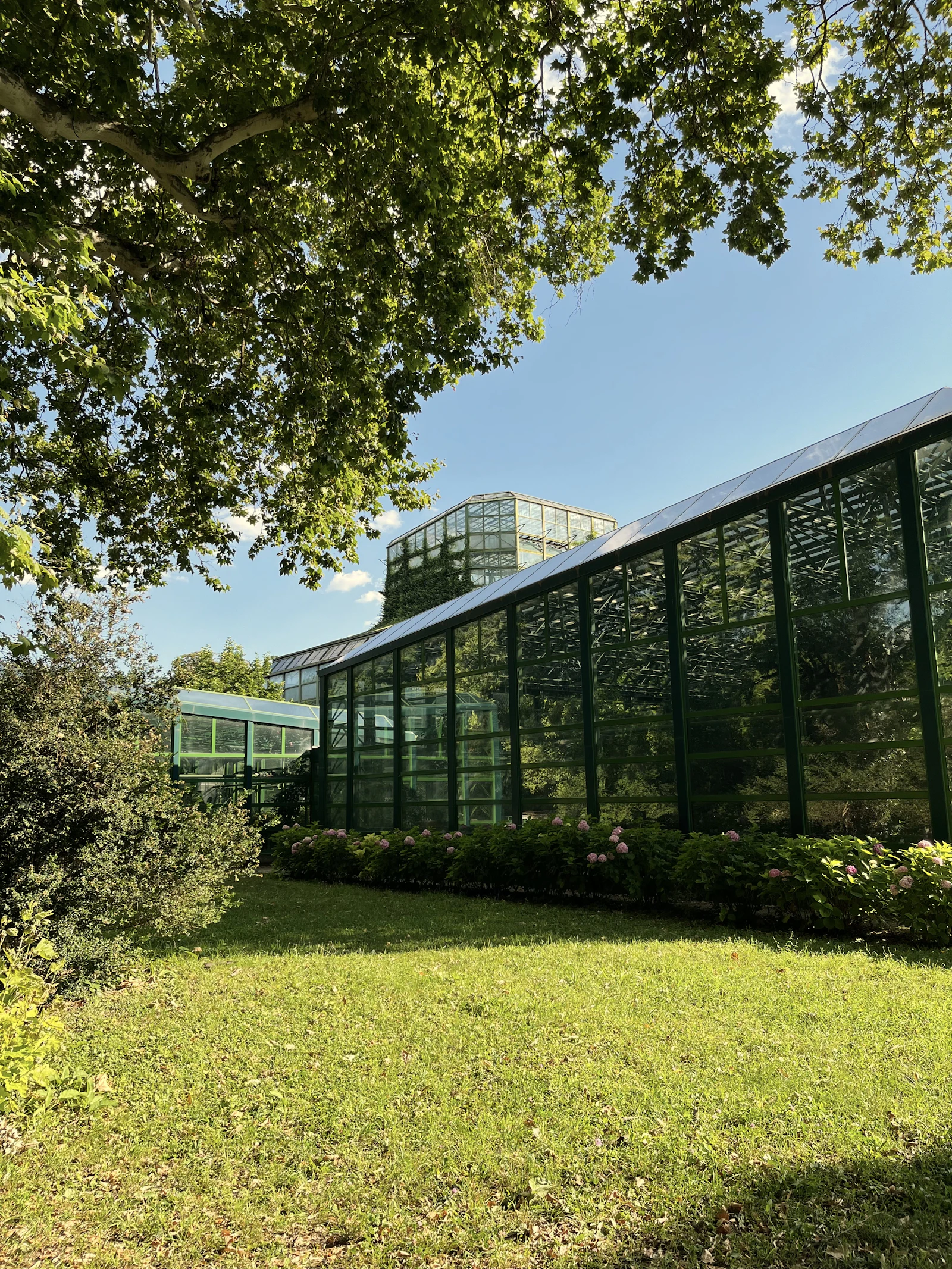
- Tropical greenhouses — several interconnected glass structures housing palms, orchids, cacti, and tropical plants from around the world
- The Japanese Garden — a contemplative corner with water features, stone arrangements, and carefully pruned trees
- The systematic collections — organized by plant family for those with a botanical interest, representing the garden’s scientific mission
- Mature trees and shaded pathways — some of the oldest and most impressive trees in Bucharest, many dating to the 19th century
“The Botanical Garden is what Bucharest would feel like if the entire city slowed down. It is the quietest 17 hectares in the capital.”
Tips for Visiting
Spring and early summer are peak season. The rose garden peaks in late May through June. The greenhouses are rewarding year-round, and make an especially good winter visit.
Allow more time than you think. The garden is larger than it appears on the map. Two hours is comfortable; three hours allows you to linger.
The greenhouses are the highlight in any season. Even on a grey winter day, the tropical greenhouses are warm, green, and worth the trip alone.
Photography is excellent here. The garden is photogenic in every season. Early morning light is particularly good.
Getting there: Politehnica metro station (M1, M3) is about a 10-minute walk. Eroilor metro (M1, M3) is 15 minutes. The garden entrance is on Soseaua Cotroceni.
Combine with: The Cotroceni Palace (Presidential Palace) is immediately adjacent — guided tours are available but must be booked in advance. The Palace of Parliament is about a 20-minute walk east.
Is It Worth It?
Very much so, especially in spring and summer when the outdoor gardens are in full bloom. The Botanical Garden is one of Bucharest’s most pleasant and underappreciated attractions — a place where you can spend a peaceful morning surrounded by plants and birdsong while the city buzzes outside the walls. The greenhouses alone are worth the modest admission price, and the garden’s proximity to the Cotroceni area makes it easy to combine with other visits.
A Glimpse into the Past
A horse cart at the Botanical Garden in Cotroceni, 1942 -- photographed by Willy Pragher, showing the garden's entrance in the wartime era
Photo: Willy Pragher · CC BY 4.0 · Wikimedia Commons
The Botanical Garden in Cotroceni, 1942 -- relocated to this location in 1884 under director Dimitrie Brandza, the garden was already well-established by the time of this photograph
Photo: Willy Pragher · CC BY 4.0 · Wikimedia Commons
Soseaua Cotroceni 32, Sector 6, Bucuresti
Open in Google Maps