Prices verified: March 2026
Have more questions about Museum of the Romanian Peasant (Muzeul Taranului Roman)? Ask Bucur.History
The Museum of the Romanian Peasant was founded in 1906 and moved into its current building — a striking Neo-Romanian architectural gem designed by Nicolae Ghica-Budesti — in 1941. The building itself, with its carved stone details, arched loggias, and ceramic tile decorations, is as much an exhibit as anything inside it.
The museum has had a turbulent identity. During the communist period (1953-1990), it was repurposed as the Museum of the Communist Party — its folk art collections were shoved into storage and replaced with propaganda. After the 1989 Revolution, the original collections were restored, and the museum was reborn as a celebration of Romanian rural life and folk traditions.
In 1996, the museum won the European Museum of the Year Award — a recognition that put it on the international cultural map and validated Romania’s rich folk heritage. The award was well deserved: the museum’s collection of over 100,000 objects includes textiles, costumes, icons on glass and wood, ceramics, tools, and entire reconstructed interiors from traditional village homes.
What to See
- Traditional costumes — an extraordinary collection spanning Romania’s diverse regions, each with distinct embroidery patterns, materials, and colors that tell you exactly where the wearer was from
- Icons on glass and wood — a remarkable collection of Romanian religious folk art, many painted by anonymous village artisans
- Ceramics and textiles — from everyday household objects to festive ceremonial pieces
- The reconstructed village house — an entire traditional home reassembled inside the museum, complete with furnishings, textiles, and household objects
- The communist-era exhibit in the basement — a small but powerful collection of communist propaganda and memorabilia from the museum’s years as a party shrine, preserved as a historical counterpoint
- The museum shop — one of the best in Bucharest for authentic folk art, handmade textiles, and traditional Romanian crafts
“If you visit only one museum in Bucharest that is not the Palace of Parliament, make it this one. It will change how you see Romania.”
Tips for Visiting
Start with the ground floor and work up. The exhibition flow makes more sense bottom to top, and you will be less fatigued for the upper floors.
Do not skip the basement. The communist-era exhibit is small but fascinating — a reminder of how the museum itself became a political tool.
The museum shop is excellent. Budget time and money for it. The folk art, textiles, and books here are high quality and reasonably priced — far better than tourist-shop souvenirs.
Free first Wednesday. Admission is free on the first Wednesday of each month. Expect it to be busier.
Getting there: Piata Victoriei metro station (M2) is a 5-minute walk. The museum is on Soseaua Kiseleff, the grand boulevard that leads north toward the Arch of Triumph.
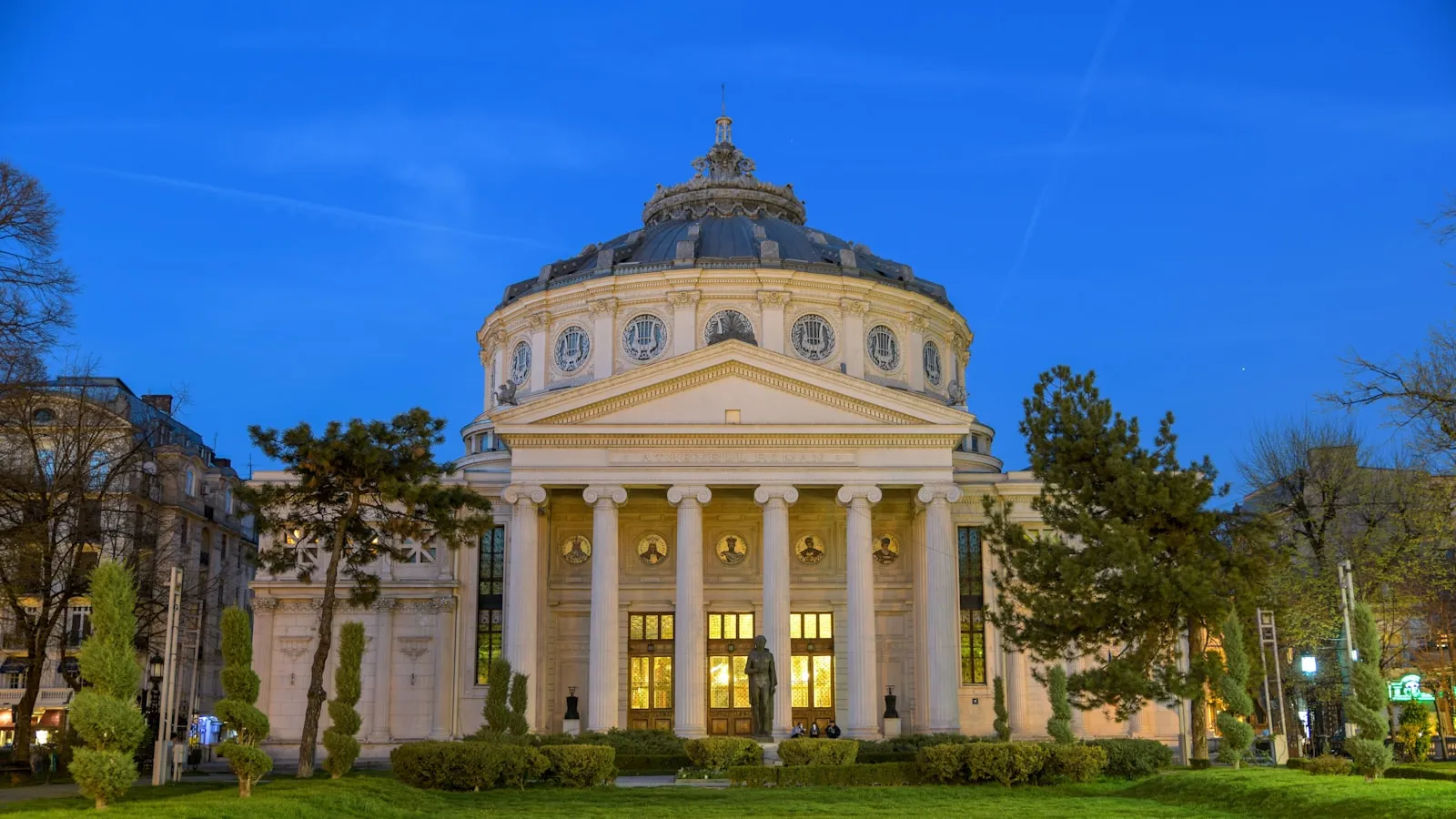
Combine with: The Romanian Athenaeum and Revolution Square are a 15-minute walk south. The Village Museum (Muzeul Satului) is 20 minutes north along Kiseleff, offering a complementary open-air experience of traditional Romanian architecture.
Is It Worth It?
Without question. This is one of the most rewarding museums in Bucharest and one of the best folk art museums in Europe — that European Museum of the Year Award was not a fluke. Even if folk art is not usually your thing, the sheer quality and beauty of the collections, combined with the stunning building and the thought-provoking communist basement exhibit, make this a highlight of any Bucharest visit. Allow at least 90 minutes.
A Glimpse into the Past
"Stroll on Soseaua Kiseleff" by Stefan Luchian -- the boulevard where the Museum of the Romanian Peasant was built in 1912-1941, captured in the painter's impressionist style
Photo: Stefan Luchian · Public domain · Wikimedia Commons
Construction on Soseaua Kiseleff in the 1930s, by Iosif Berman -- the museum building was being completed during this period of interwar modernization
Photo: Iosif Berman · Public domain · Wikimedia Commons
Soseaua Kiseleff 3, Sector 1, Bucuresti
Open in Google Maps